
Key facts: Emergency Laundry and Softener Overflow
- Washing machine drains should be cleared periodically to prevent buildup of lint, mold and other deposits [1].
- Household softeners are regenerated with a salt brine, and the waste water from that cycle is typically sent to the sewer [2].
- Henderson's water comes from Lake Mead and is very hard, which is why softeners are common locally [3][4].
- Hard water leaves calcium and magnesium carbonate scale on surfaces, more so when the water is heated [5].
What's happening
Why washers and softeners overflow together
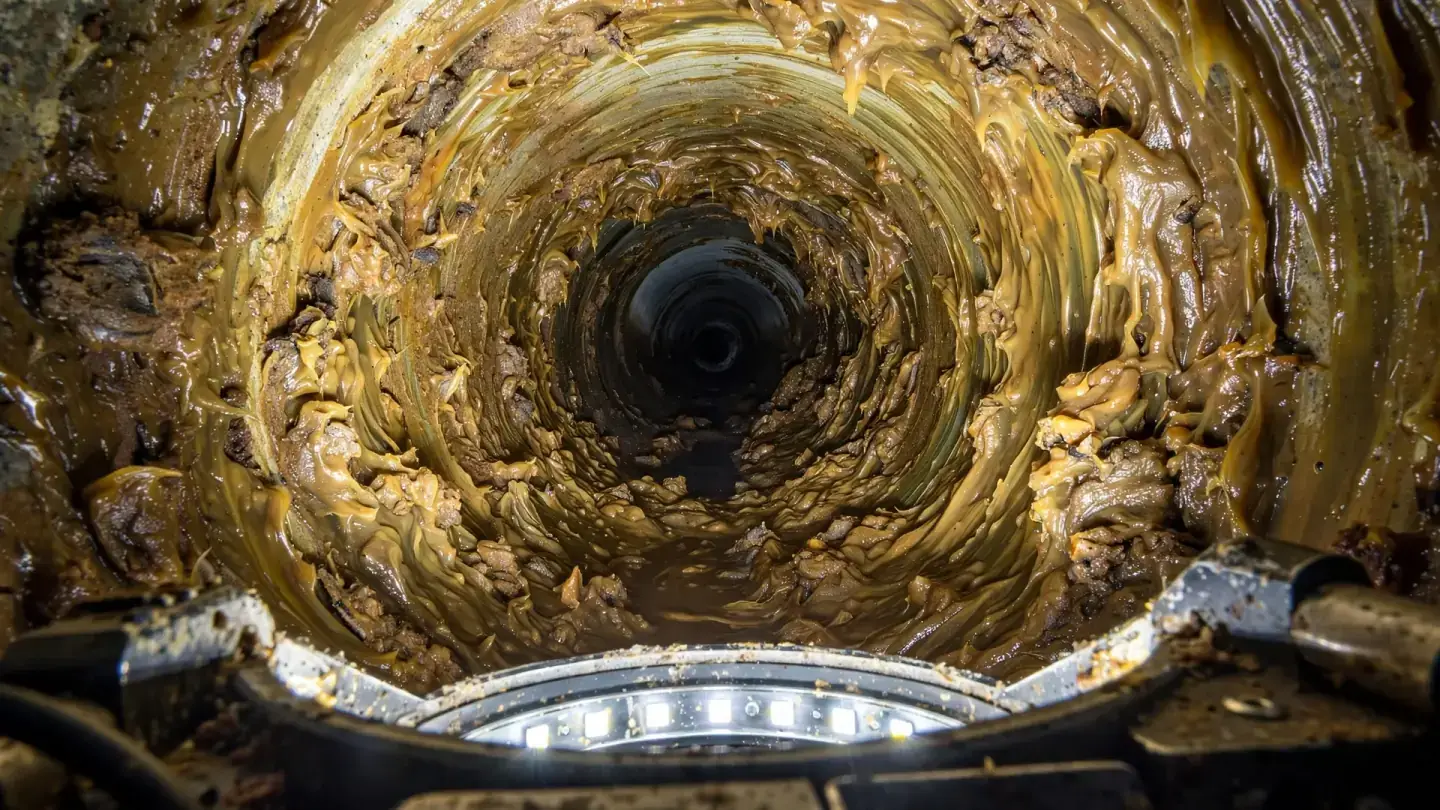
A washing machine empties its tub quickly through a hose hooked into a standpipe or a recessed washer box in the wall. If the pipe below is partly blocked, it can't take that burst of water and it spills over the top. Lint, hair and detergent residue are the usual cause; washer drains need periodic clearing for exactly that reason [1].
Water softeners add a second source. A softener recharges its resin with a salt brine and then rinses, and that waste water is normally sent to the drain [2]. In a lot of Henderson laundry rooms the softener's discharge tube runs into the same standpipe as the washer. So you can clean up a washer spill, go to bed, and wake up to a second puddle when the softener regenerates overnight.
This page is about that urgent overflow. If you're weighing whether a softener helps or hurts your drains over the long run, the guide to water softeners and drain scale covers it.
Warning signs
What the overflow pattern tells you
Spills only during the spin or drain
The standpipe or its trap is restricted; the washer is pushing faster than the line can carry.
Puddle appears at night with no laundry running
A softener regeneration into the same blocked pipe is the likely source.
Kitchen sink gurgles when the washer drains
The laundry and kitchen may share a branch that is narrowing.
Water comes up in a tub or toilet too
The main line may be blocked; stop all water use in the house.
White crust around the standpipe opening
Mineral scale from hard water and brine discharge may be narrowing the pipe [5].
Safe immediate steps
Getting the laundry room under control
- 1
Pull the washer hose out of the standpipe
Hang it into a bucket so any water left in the tub has somewhere to go. Watch whether the standpipe level drops.
- 2
Find the softener discharge line
Trace the small tube from the softener to where it drains. Note whether it shares the washer's pipe.
- 3
Wipe and fan the floor
Mop the floor, lift rugs and run a fan. Check under the washer for water trapped by the pan or feet.
- 4
Check other drains
Run a sink briefly and watch the standpipe. If water rises there, the clog is beyond the laundry branch.
- 5
Leave the softener on bypass
It can stay off until the line is cleared; the house still gets water, just unsoftened.
What not to do
Laundry overflow moves that backfire
- Running another load to test itA full drain cycle into a blocked pipe just floods the floor again.
- Pouring drain cleaner into the standpipeChemical openers are caustic or acidic and rarely reach a lint mass deep in the wall [6].
- Taping the hose tighter into the pipeSealing the hose can siphon wastewater back into the machine.
- Re-routing the softener into the yardBrine-softened water is poorly suited to soil and plants [2].
When to call
Call now if any of these apply
- The standpipe stays full after the washer stops.
- Water is reaching baseboards, carpet or the hallway.
- Other drains in the house rise or gurgle when laundry drains.
- The softener has overflowed more than once.
- You only have one usable bathroom and its drains are slowing too.
The visit
How is an overflowing laundry drain usually cleared?
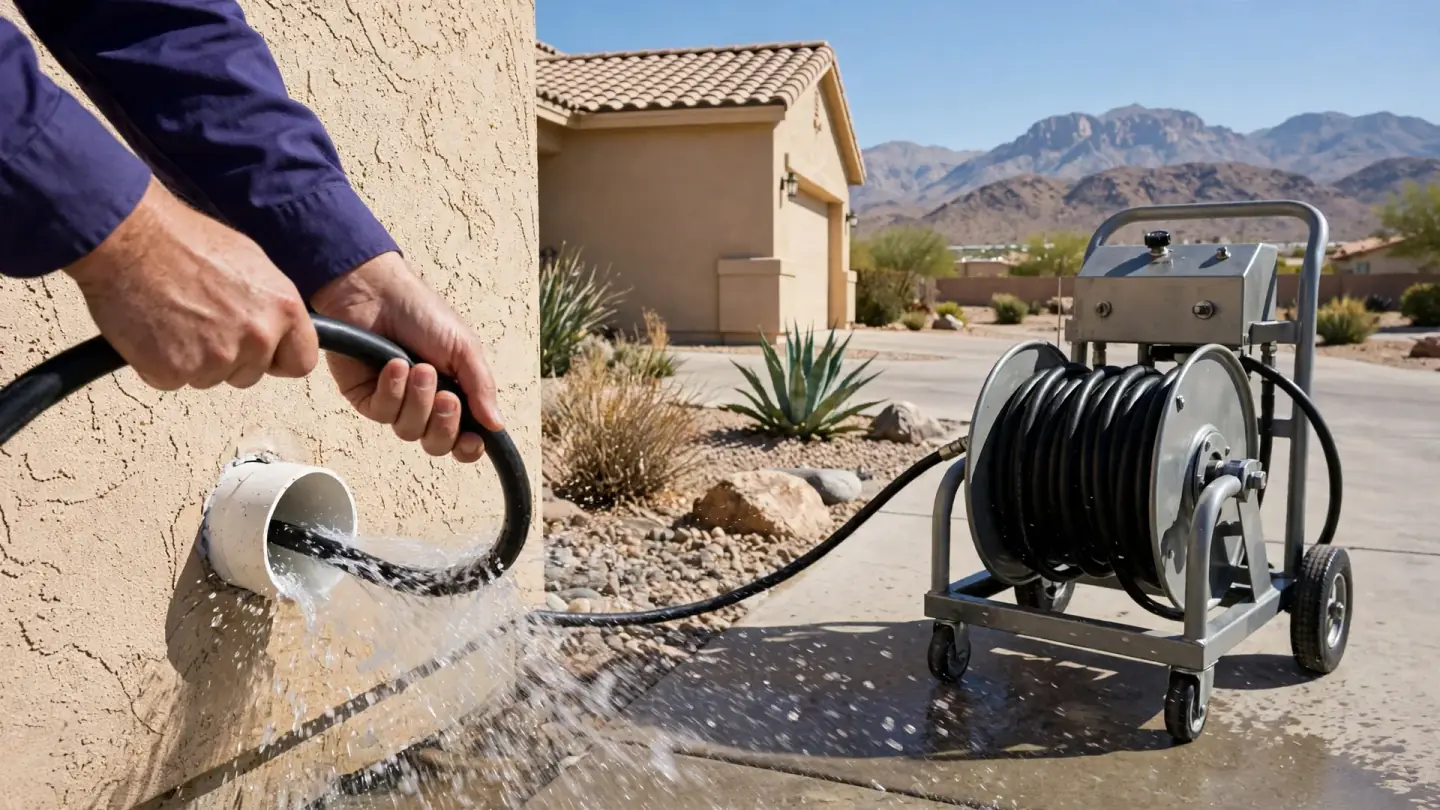
The independent contractor will usually run a cable down the standpipe or through a nearby cleanout to break up the lint and residue. If the branch is long or heavily scaled, they may suggest hydro jetting instead of a cable. The planned version of this work sits under clogged drain repair, and whole-house backups are on emergency drain cleaning.
They'll often check how the softener drains while they're there. A discharge tube should hang above the standpipe with an air gap, not jammed inside it, so that drain water can't be pulled back into the softener. Ask them to confirm yours.
Before they leave, run a full drain cycle and watch the standpipe. If it holds without rising, ask what you can do to keep lint out: a lint trap on the hose end is a common suggestion.
Henderson factors
Why laundry drains clog faster in Henderson
Henderson's water is drawn from Lake Mead and is classed as very hard, which is why so many local homes run a softener [3][4]. Hard water leaves scale on pipe walls, especially where warm water flows, and laundry lines carry plenty of warm water [5]. That rough lining grabs lint, and the standpipe narrows season by season.
Many Henderson laundry rooms sit inside the house, next to the garage or off a hallway, rather than in a basement. When they flood, water goes straight onto finished flooring. That's why speed matters more here than in a house where the washer sits over a floor drain.
If the overflow happened after a long trip, read the second home drain backup page too. Other urgent problems are on the emergency hub.
FAQ
Laundry and softener overflow questions in Henderson
Answers about urgent laundry and softener spills; more on the [questions hub](/faq/). See [all emergency topics](/emergency/).
Why does my washer standpipe overflow halfway through the drain cycle?
A standpipe that overflows partway through draining usually has a partial clog, often lint, hair and detergent residue in the trap or the pipe inside the wall. The washer pumps faster than the narrowed pipe can take. Stop the load, hang the hose in a bucket and call if it won't drain down on its own.
Can a water softener flood the laundry room by itself?
A water softener can flood a laundry room if its regeneration water drains into a blocked standpipe. The brine and rinse cycle sends waste water to the drain [2], often overnight. If the pipe can't carry it, it spills. Put the softener on bypass until the line is cleared.
Is it okay to keep using the washer if it only overflows sometimes?
Occasional overflows mean the drain is already restricted, so it's best to hold off. Each load adds more lint to the clog and risks soaking the floor and walls. Use a laundromat or wait until the line is cleared, then ask about a lint trap for the hose end.
Why does the kitchen sink back up when I run the washing machine?
When the kitchen sink backs up during a wash, the laundry and kitchen likely share a branch that is partly blocked. The washer's quick discharge has nowhere to go and pushes into the sink. Stop the washer and call, because that shared clog can soon affect more fixtures.
Should my softener drain hose sit inside the washer standpipe?
A softener drain hose should end above the drain with an air gap, not pushed down inside the pipe. The gap stops dirty water being drawn back toward the softener. Ask the contractor to check it after clearing the line, and to secure it so it can't slip down.
Does Henderson hard water make laundry drains clog sooner?
Henderson's very hard water can make laundry drains clog sooner, because scale forms on pipe walls that carry warm water [3][5]. The rough coating catches lint and detergent residue. Regular clearing and a lint trap on the hose help keep the standpipe open between visits.