
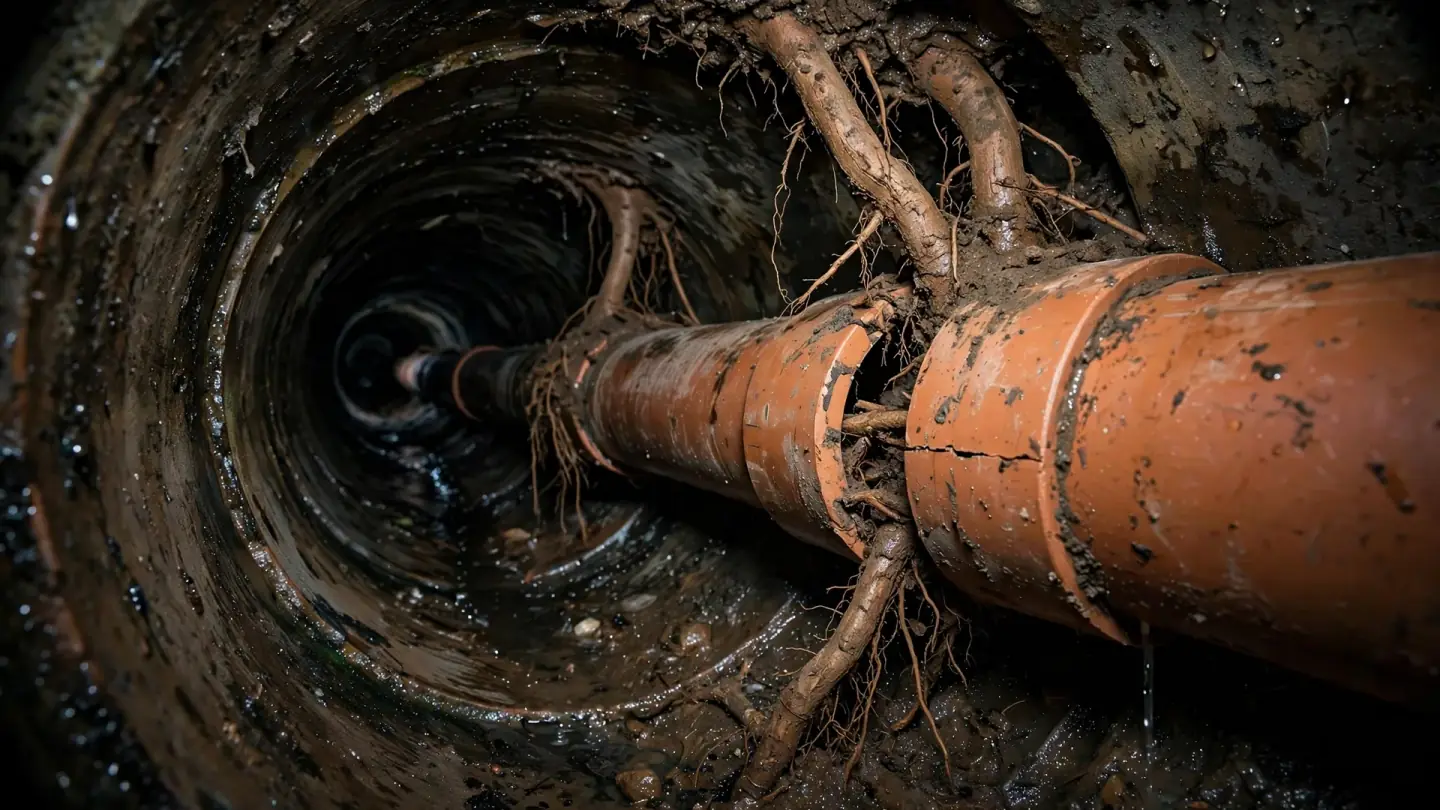
Key facts: Desert tree roots in sewer lines
- A Nevada extension horticulturist says local landscape trees root mainly in the upper soil and spread sideways [1].
- A leaking sewer pipe can trigger a burst of feeder roots, and roots that thicken over years can crack a pipe [1].
- Mechanical root removal is a temporary fix; lasting fixes involve the pipe or the tree [2].
- Caliche, a cemented calcium carbonate layer common in the Mojave, blocks drainage and restricts root growth [3].
Short answer
How do roots find a sewer pipe in such dry ground?
Roots don't seek out pipes on purpose; they grow where water is. In Henderson the natural soil is dry, so trees grow most actively where irrigation and any other moisture keep the ground damp. A Nevada extension answer notes that the trees grown in the region mostly root in the upper soil and spread sideways, and that a sound pipe often causes no immediate problem, but a leaking one attracts a flush of fine feeder roots [1].
Once those feeder roots get inside through a loose joint or crack, they find water and nutrients all year. They thicken, branch and form a mat that catches paper and grease. Over years, the thicker roots can press on the pipe and crack it further [1].
The lateral from your house to the city main is yours to maintain in Henderson [4], so the roots in it are your problem too, even if the tree belongs to a neighbor.
Symptom check
Root warning signs and what to do
| What you see | Likely cause | What to do |
|---|---|---|
| Whole-house slowdown that clears, then returns | Root mat catching waste, then partly passing it | Ask for a main line cleaning and camera check |
| Gurgling toilet when the washer drains | Restriction in the lateral | Reduce heavy water use; call |
| One lush, green patch over the yard line | Lateral leaking moisture into the soil | Note its location for the contractor |
| Backups that recur at the same time each year | Roots growing back after an earlier clearing | Discuss repair or tree options |
| Fine roots pulled out on a cable | Confirmed root intrusion | Camera inspection to find the entry point |
Safe checks
What you can check from the yard
- 1
Find the line's path
Locate the outdoor cleanout and picture a line from there toward the street. The guide to finding the cleanout on a desert home helps.
- 2
List the trees near it
Note any tree or large shrub within a few strides of that line, including in a neighbor's yard.
- 3
Look at the drip lines
Check whether irrigation emitters sit near the lateral's path. Constant moisture there encourages roots.
- 4
Watch for wet or sunken spots
A soft patch or a dip over the line can mean a leak. Don't dig; just note it.
- 5
Record the pattern
Write down when slowdowns happen. A seasonal pattern is a strong clue for roots.
Cause in depth
Irrigation, caliche and how roots spread here
Much of the Las Vegas Valley sits on caliche, a layer where calcium carbonate cements soil and gravel into something close to rock [3][5]. Caliche blocks drainage and restricts root access to deeper water [3]. That pushes tree roots to spread sideways in the softer, irrigated soil above it, which is the same zone where many laterals run.
Trench backfill around a sewer line is often looser and holds water differently from the soil around it, so roots can follow it easily. Add a drip emitter close by and the line becomes the most attractive strip in the yard.
Native desert trees aren't automatically safe. Honey mesquite, for example, is known for deep taproots and is hard to remove because it resprouts from buds below ground [6]. Any tree that is watered regularly near a leaking pipe can become a problem.
Cause in depth
Which trees are riskier near a lateral?
The Nevada extension answer advises avoiding aggressive, water-hungry trees such as willow, silver maple, elm and cottonwood near sewer lines [1]. Those species chase water hard and grow fast. In a small Henderson yard, the same answer points out, nearly any tree can reach a line if it's planted close enough.
If you're planting, keep trees well away from the lateral's path and water them with emitters placed away from it.
How a pro diagnoses it
How roots are confirmed and cleared
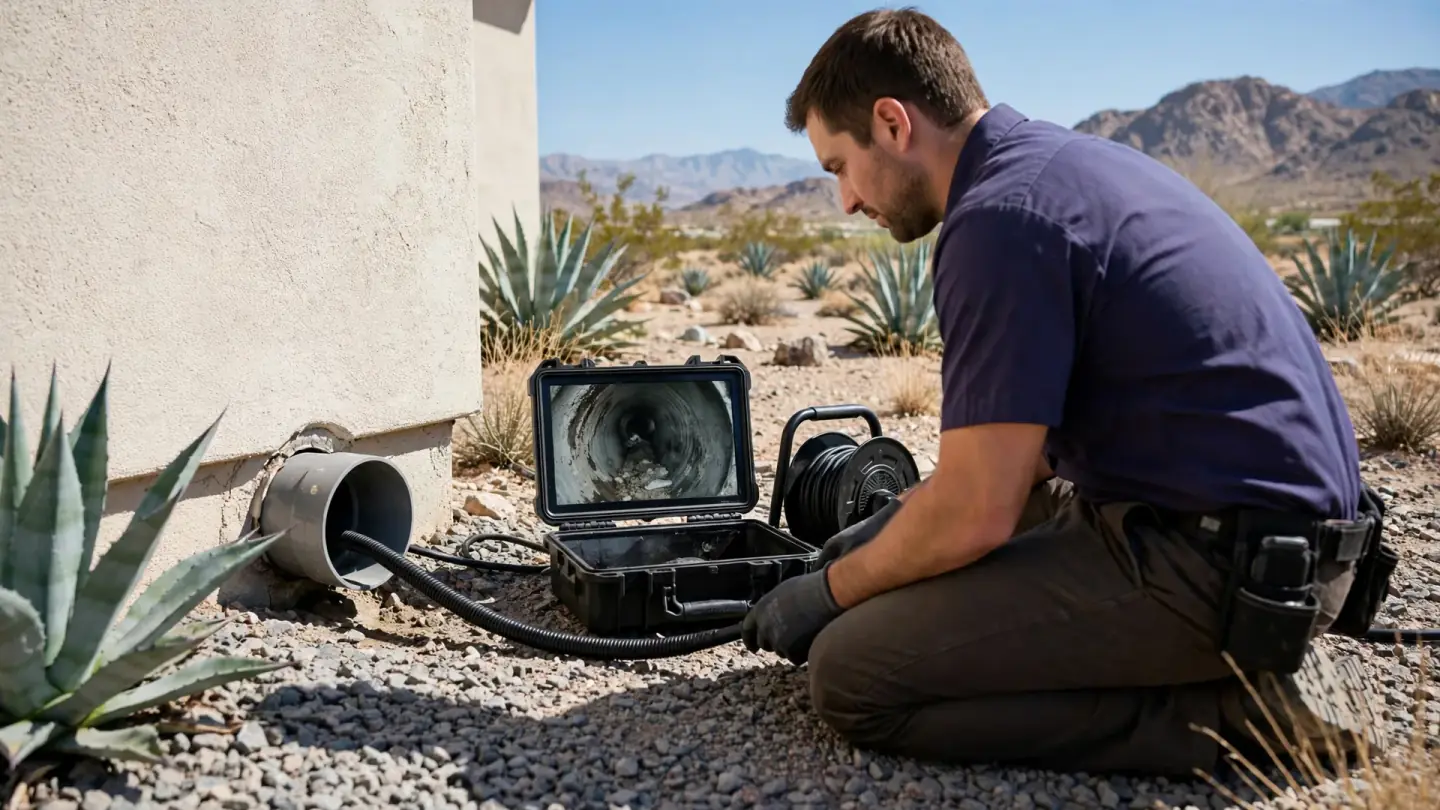
The independent contractor will usually clear the line first from the outdoor cleanout with a cable machine fitted with a cutting head. The roots that come back on the cable confirm the cause. Then a camera run shows where they entered, how much of the pipe is affected and whether it's cracked or offset. The sewer line inspection page explains that step.
For heavy root mats, some contractors use hydro jetting to scour the pipe after cutting. Either way, clearing is temporary: roots grow back from what remains outside the pipe [2]. Lasting fixes involve repairing or lining the damaged section, or removing the tree. Ask the contractor to explain the options for your pipe, and see main sewer line cleaning for the routine side.
Prevention
Keeping roots out of your lateral
- Plant new trees well away from the lateral's path.
- Move drip emitters away from the sewer line.
- Schedule periodic cleaning if roots have been found before.
- Fix known leaks or offsets rather than clearing them indefinitely.
- Avoid flushing wipes and grease, which make root mats catch more.
Before you call
What to tell the contractor about suspected roots
- Where the cleanout is and roughly where the line runs.
- Which trees and drip lines are near that path.
- How often slowdowns have happened, and in which months.
- Whether roots were found during any earlier cleaning.
- Any wet, green or sunken patch in the yard.
FAQ
Root intrusion questions from Henderson yards
Answers about roots in desert sewer lines; more on the [questions hub](/faq/). Back to [all guides](/guides/).
Do desert trees really grow into sewer pipes in Henderson?
Desert trees can grow into Henderson sewer pipes when the pipe has a leak or loose joint. Irrigated landscape trees root mostly in the upper soil and spread sideways, and a leaking pipe attracts fine feeder roots [1]. Once inside, those roots grow into a mat that catches waste.
How far should I plant a tree from my sewer line?
Plant trees well away from the lateral, and the further the better for large or water-hungry species. A Nevada extension answer warns that in a small yard almost any tree can reach a line [1]. Find your line's path before planting, and keep drip emitters away from it.
Will cutting the roots out of my sewer line fix it for good?
Cutting roots out of a sewer line clears it for now, but roots grow back from what remains outside the pipe [2]. A lasting fix means repairing or lining the damaged section, or removing the tree. Ask the contractor for camera footage to decide which makes sense.
Can my neighbor's tree roots block my sewer lateral?
A neighbor's tree can send roots into your lateral if the line runs near it. In Henderson the lateral from your house to the city main is your responsibility [4], so clearing it is too. Talk to your neighbor if a camera shows their tree is the source.
Is copper sulfate safe to flush for roots in a Henderson home?
Copper sulfate can kill roots it touches, but it's highly toxic to people and aquatic life and can corrode some fittings [2]. Check with Henderson Utility Services before putting it into the sewer, and ask the contractor whether mechanical clearing is a better fit.
Why do my drains slow down around the same time every year?
Drains that slow at the same time each year often point to roots regrowing after an earlier clearing, especially with irrigation schedules that change by season. A camera inspection can confirm it. Regular cleaning before that time of year, or repairing the entry point, can break the cycle.
Sources and citations
- [1]Ask Extension — Nevada horticulture answer on tree roots and sewer lines
- [2]University of Washington Elisabeth C. Miller Library — Tree roots and sewer lines
- [3]Wikipedia — Caliche
- [4]City of Henderson — Water and Sewer Laterals
- [5]Las Vegas Advisor — Why Las Vegas houses don't have basements (caliche)
- [6]Wikipedia — Prosopis glandulosa (honey mesquite)