
Key facts: Floor Drain Cleaning
- Every floor drain connected to the sewer has a trap whose water seal blocks sewer gas, and that seal can evaporate when the drain sits unused [1].
- Henderson's average July high is about 101°F and the city gets around 5.7 inches of rain over a year [2].
- Most Las Vegas Valley homes are slab-on-grade, so floor drains connect to lines running under the concrete [3].
- Because floor drains sit low, they are often the first place a main sewer blockage shows up, and the homeowner owns the lateral to the city main [4].
Where they are
Floor drains you might have in a Henderson home
Not every home has every type. Knowing which one you are dealing with helps the contractor plan the visit.
Laundry room drain
A grate in the floor near the washer, there to catch overflow or a burst hose. It sees lint, soap and the odd sock.
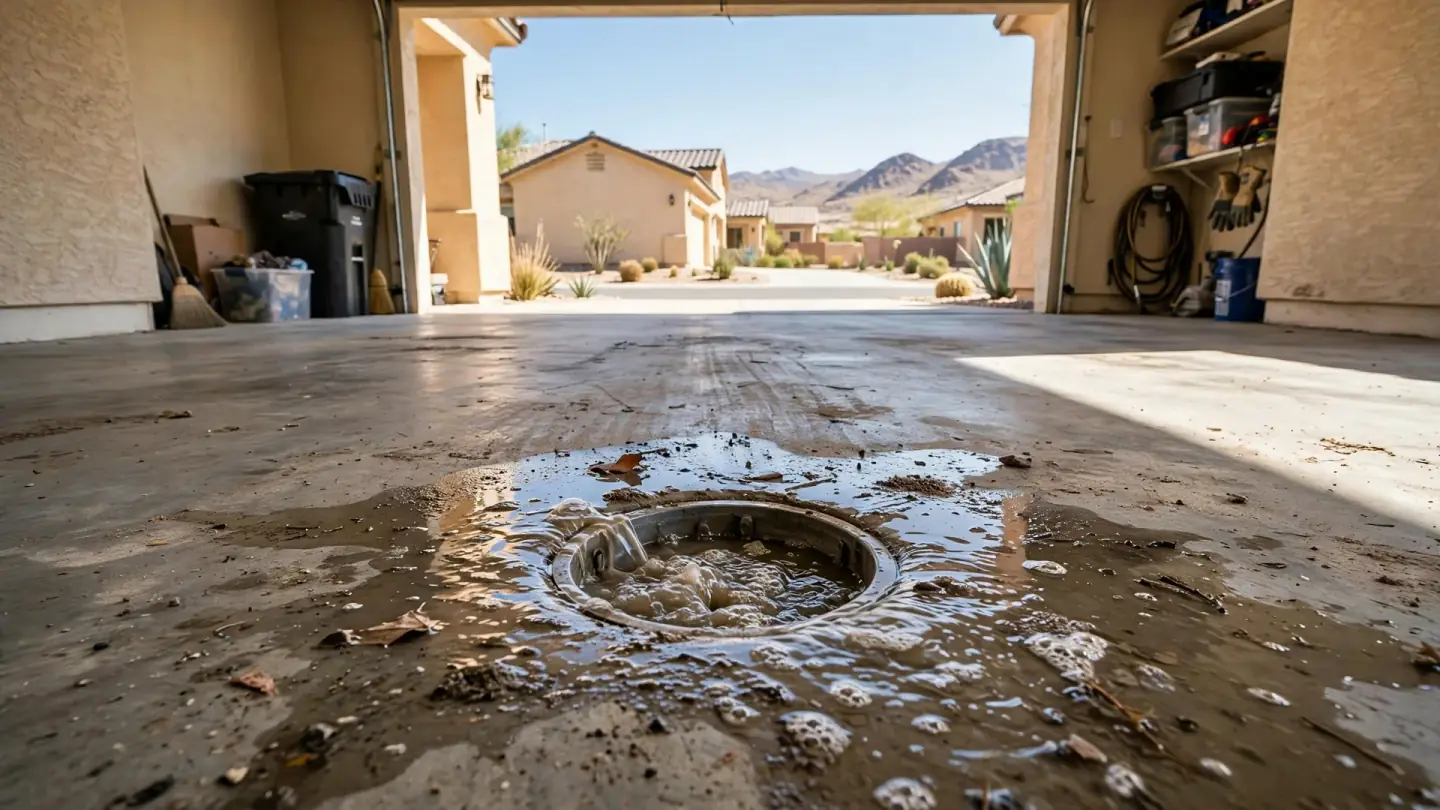
Garage floor drain
Less common in newer homes but found in some custom builds and workshops. It collects grit, leaves and anything washed off a car.
Utility or mechanical room drain
Near a water heater or softener, catching relief valve discharge and softener regeneration water.
Walk-in shower or wet room drain
Technically a floor drain too. Covered in detail on the shower and bathtub page.
Pool equipment or patio drain
Some outdoor drains connect to the sewer, others to the yard or street. The contractor can tell which you have.
Commercial floor drains
Restaurants, gyms and shops have many floor drains with heavier loads. See commercial drain cleaning.
The dry-trap problem
Why does a floor drain smell like sewer when nothing is clogged?
Under every floor drain grate is a trap, a dip in the pipe that holds water. That small pool is the only thing stopping sewer gas from rising into your garage or laundry room [1].
Sinks and toilets refill their traps every time they are used. Floor drains do not. They only get water when something spills, and in many homes that might be months apart. Henderson's long hot summers, with July highs around 101°F, and very dry air speed up evaporation [2]. Once the trap dries out, sewer odor comes straight up through the grate.
So the first question with a smelly floor drain is not whether it is clogged, but whether it is dry. Pouring a bucket of water in is often the whole fix. If the smell returns within days, there may be a crack in the trap, a missing trap, or a venting problem, which is worth having checked [5].
For clogs elsewhere in the house, the clogged drain repair page is the general starting point.
Keeping traps wet
Trap primers and other ways to stop evaporation
A trap primer is a small device that adds a little water to a floor drain trap automatically, usually from a nearby water line or each time a fixture is used. They are common in commercial buildings and found in some homes.
If your floor drain has a primer and still dries out, the primer may be clogged with mineral scale, which is common with Henderson's very hard water [6]. The contractor can check it, clean it or suggest other options. Your local code requirements come from the Uniform Plumbing Code, 2024 edition, with Southern Nevada's local changes, and the contractor can tell you whether any change needs a permit from Henderson Building and Fire Safety [7].
- Pour water in every couple of weeks during summer
- Add a spoonful of cooking oil on top to slow evaporation
- Consider a one-way drain insert that closes when dry
- Have an existing trap primer checked for scale
Signs of a clog
When a floor drain needs cleaning
Water pools around the grate
A spill or overflow sits on the floor instead of going straight down.
Lint or sludge visible below
In laundry rooms, a gray mat of lint often sits just under the grate and slows everything down.
Grit and sand at the opening
Garage and outdoor drains collect desert dust, sand and gravel that settle in the trap.
Water comes up when the washer drains
A sign the shared laundry line is blocked downstream. Take this one seriously.
Smell that water does not fix
If refilling the trap does not stop the odor, something is broken, missing or blocked.
Sewage or dark water at the grate
A main line backup. See the emergency section below.
The visit
How the contractor cleans a floor drain
- 1
Lift the grate and look
Many floor drain clogs are visible right below the grate: lint, grit, leaves or a dropped object.
- 2
Clean out the trap
Debris is scooped or vacuumed out of the trap so the cable has a clear path.
- 3
Auger the line
A drain machine with a cable sized for the line is fed through the drain to break up packed lint or sediment further in [8].
- 4
Jet if sediment is packed
Sand and grit settle in low spots of a floor drain line. Hydro jetting flushes them out better than a cable alone.
- 5
Check for a main line problem
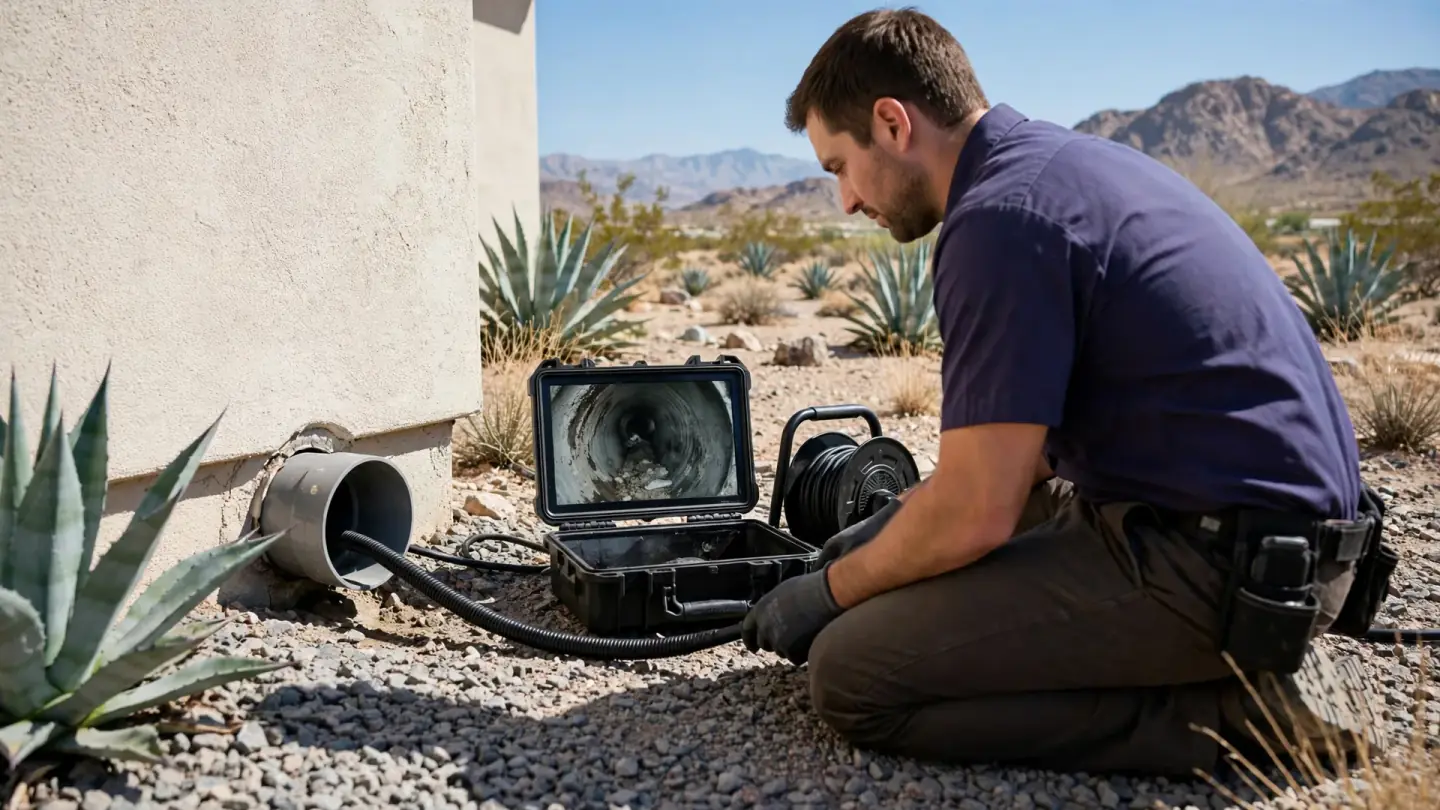
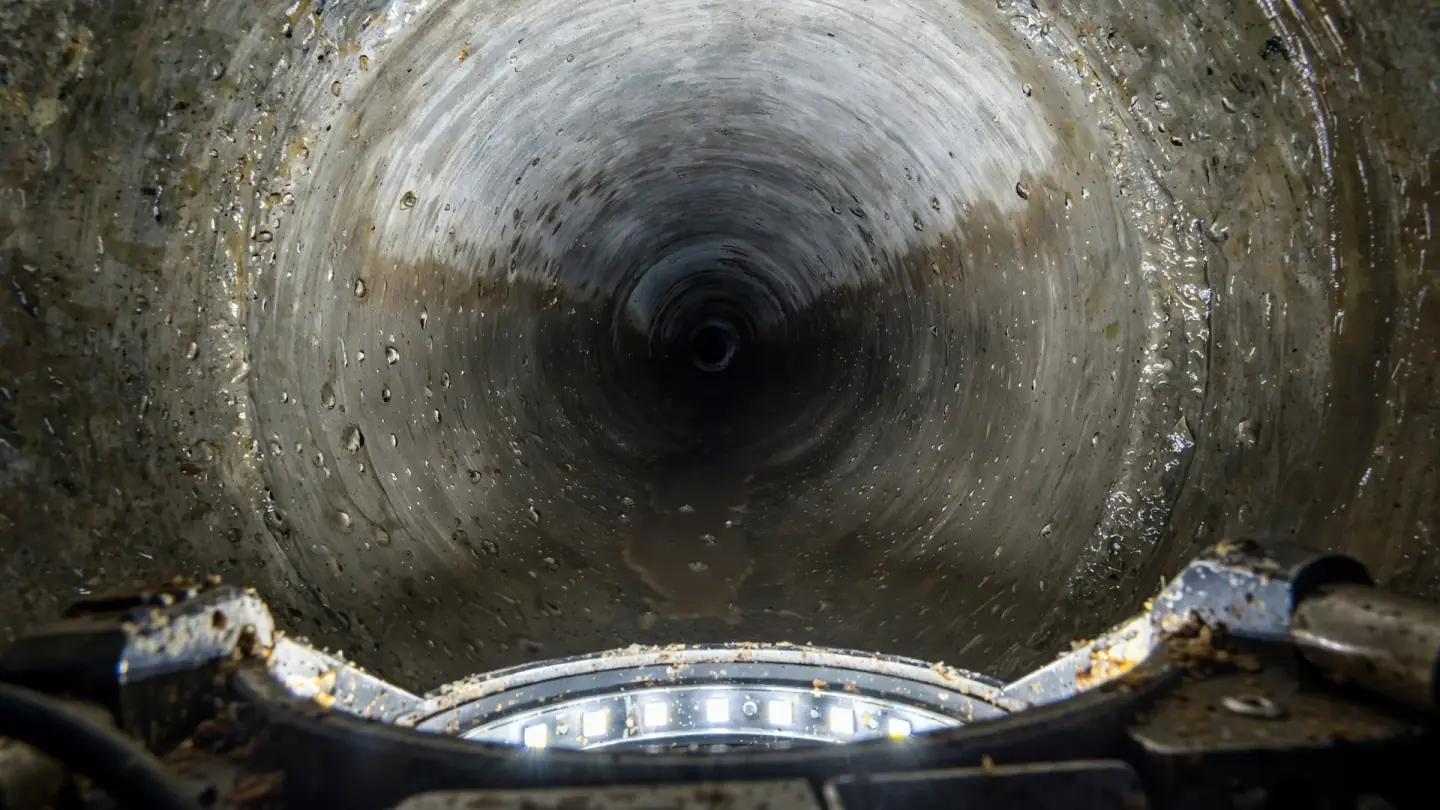
If the floor drain is clear but still backs up, the contractor looks further down, possibly with a drain camera.
- 6
Refill and protect the trap
The trap is refilled, any trap primer is checked, and you are shown how to keep it from drying out.
Local factors
Henderson conditions that shape floor drain trouble
The slab comes first. Homes here are almost always built on concrete with no basement, partly because of the hard caliche layer in local soils [3]. A floor drain is the lowest opening in many of those homes, and its line runs straight into the under-slab system. You can read more about how those lines behave in our slab drain line clogs guide.
Being the lowest opening has a consequence. When the main drain or sewer lateral blocks, waste rises to the lowest point first, and that is often the floor drain. The city maintains the sewer main in the street, while the lateral from the house to that main is the homeowner's responsibility [4].
Desert dust and storms add to the load. The city averages roughly 5.7 inches of yearly rainfall [2], but summer monsoon storms can bring sudden heavy downpours [9]. Garage and outdoor drains that sit dry most of the year can suddenly take in sand, gravel and debris all at once.
Water heaters and softeners matter too. Very hard water means many homes have a softener, and its regeneration cycle sends salty water to a nearby drain. Scale from water heater discharge can build up in a utility drain line over time [6].
Do it yourself
Safe floor drain care you can do
- Refill the trapPour a gallon or so of water into each floor drain every couple of weeks in summer, and after any long trip.
- Lift the grate and cleanMost grates lift out or unscrew. Pull out lint, leaves and grit with a gloved hand or a shop vacuum.
- Use a lint trap on the washer hoseA mesh sleeve on the end of the washer drain hose catches much of the lint before it reaches the floor drain or standpipe.
- Sweep before you hose downIn a garage, sweep sand and debris up rather than washing it into the drain.
- Do not plunge sewageIf dark water is coming up, plunging can push waste across the floor. Stop and call instead.
Quick reference
Floor drain symptoms at a glance
| What you notice | Likely cause | What to do |
|---|---|---|
| Sewer smell, drain otherwise fine | Dry trap | Pour water in; consider a primer or insert |
| Smell even after refilling | Cracked trap, missing trap or vent issue | Have the contractor inspect it |
| Slow drain in laundry room | Lint buildup | Clean the grate and trap; add a lint catcher |
| Grit at a garage drain | Sand and sediment | Clean the trap; jet the line if needed |
| Water rises as washer drains | Shared line blocked | Stop the washer and call |
| Sewage at the grate | Main line or lateral blocked | Stop all water use; treat as urgent |
Urgent cases
When does a floor drain become an emergency?
Sewage at a floor drain is one of the clearest signs of a main line blockage. Stop using water everywhere in the house, including the washer and dishwasher, and keep people and pets away from the area.
Then go to emergency sewer line cleaning and call to check emergency availability. The main sewer backup signs guide explains what else to look for while you wait.
FAQ
Garage, laundry and patio floor drain questions in Henderson
Spoken questions about floor drain cleaning, answered briefly. Other topics: [quick-answer page](/faq/). Back to [every drain service we cover](/services/).
Why does my garage floor drain smell like sewer gas in summer?
A garage floor drain that smells like sewer gas in summer usually has a dried-out trap. The trap's water seal blocks sewer gas, and it evaporates when the drain sits unused [1]. Henderson's July highs average about 101 degrees F [2], so a dry garage can lose that seal quickly. Pouring water in regularly usually stops the odor.
How often should I pour water into an unused floor drain in Henderson?
An unused floor drain in Henderson usually needs a few cups of water every couple of weeks, more often in summer heat. The water refills the trap seal that keeps sewer gas out [1], and dry desert air speeds evaporation [2]. A small splash of mineral oil on top can slow evaporation in drains that rarely see water.
What does a trap primer do on a floor drain?
A trap primer automatically adds small amounts of water to a floor drain's trap so the seal does not dry out. Primers are common in commercial buildings and sometimes installed in homes with rarely used floor drains. Whether one is required depends on local code [7], so the contractor you're connected with can say if adding one makes sense.
Does my backyard patio drain connect to the sewer in Henderson?
A backyard patio drain in Henderson often does not connect to the sanitary sewer; many patio and yard drains discharge to the landscape or street instead. Storm water generally should not go into the sewer. During monsoon storms [9], a blocked patio drain can flood a yard, so knowing where yours leads helps decide who can clear it.
Why did sewage come up through my laundry room floor drain?
Sewage coming up through a laundry room floor drain usually means a blockage in the main line further downstream. Floor drains sit low, so they are often the first place a main sewer backup shows, and the homeowner owns the lateral to the city main [4]. Stop using water and call to have the main line checked.
Can I permanently cap a floor drain I never use?
Capping a floor drain permanently is possible in some cases, but it removes a path for water from a leaking water heater or washer. Local code may also have a say [7]. Many homeowners use a removable drain plug or a one-way seal instead. Ask the contractor you're connected with which option suits your floor drain.
What usually clogs a garage floor drain in a slab-on-grade home?
Garage floor drains in slab-on-grade homes usually clog with dirt, sand, leaves and debris washed in from vehicles and sweeping. The line runs under the concrete [3], so the clog is often reached with a small cable through the grate opening [8]. Keeping a grate cover in place and sweeping before rinsing helps limit buildup.
Sources and citations
- [1]Wikipedia: Trap (plumbing)
- [2]Wikipedia: Henderson, Nevada
- [3]Las Vegas Advisor: Why Las Vegas houses don't have basements
- [4]City of Henderson: Water and sewer laterals
- [5]Wikipedia: Drain-waste-vent system
- [6]City of Henderson 2024 Water Quality Report
- [7]City of Henderson: Uniform Plumbing Code
- [8]Wikipedia: Plumber's snake
- [9]Wikipedia: North American monsoon
- [10]Wikipedia: Drain cleaner