
Key facts: Drain Camera Inspection
- Most homes in the Las Vegas Valley are built slab-on-grade, so many interior drain lines are buried under or within the concrete floor [1].
- Drain-waste-vent systems rely on vents to let air in; a blocked vent can cause slow drains and gurgling even when the pipe itself is clear [2].
- Henderson's Lake Mead water is hard, at around 16 grains of hardness per gallon, and hard water leaves carbonate scale on surfaces [3][4].
- A plumbing trap holds a small pool of water that stops sewer gas, and that water can evaporate when a fixture goes unused [5].
What it is
A look inside the pipe that keeps causing trouble
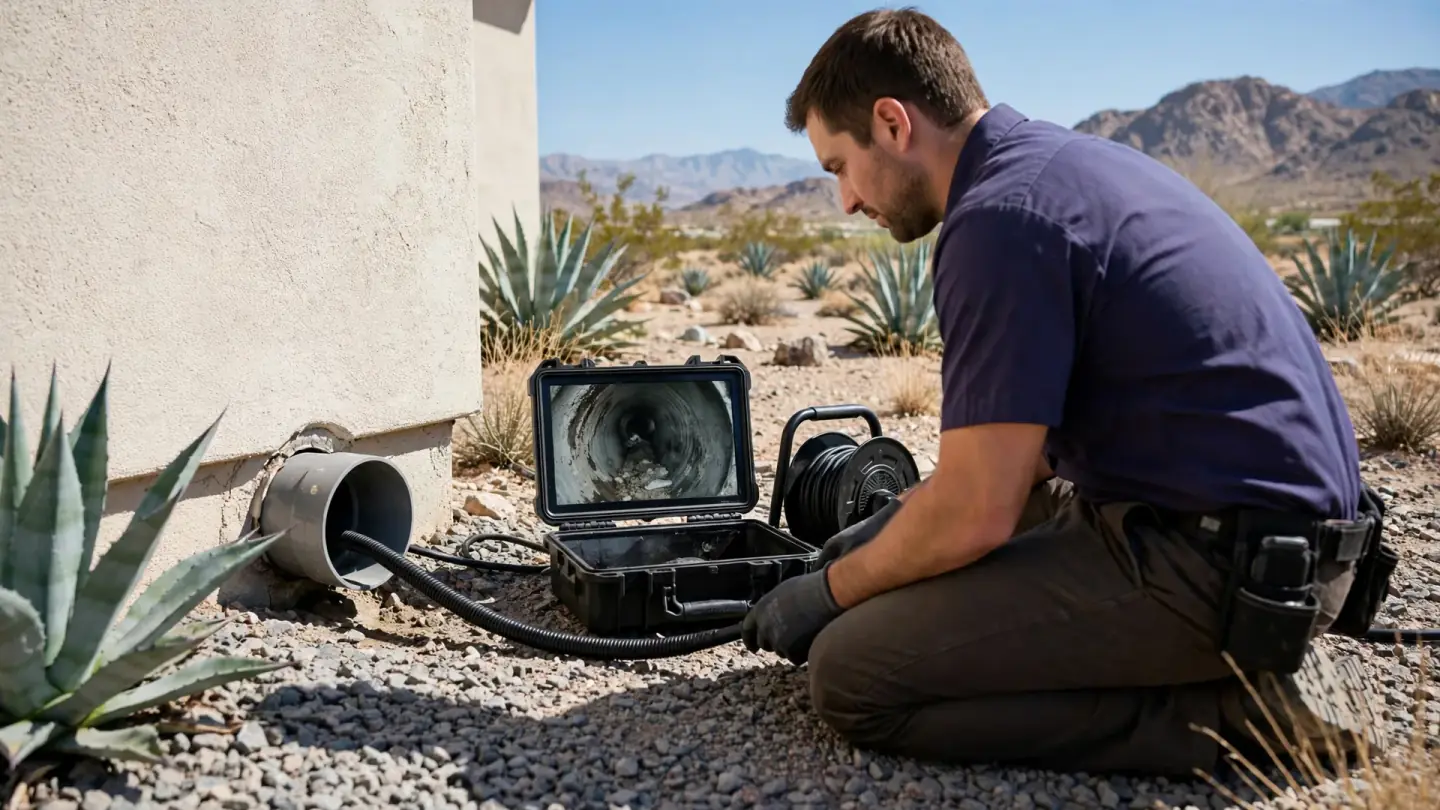
A drain camera is a small waterproof camera with its own light, mounted on the end of a flexible push cable. The contractor feeds it into a drain while watching the picture on a screen.
For interior work, the cameras are often smaller than the ones used for sewer laterals, so they can travel through the narrower branch lines that serve kitchens, bathrooms, laundry rooms and floor drains.
The aim is simple: find out why a particular drain is misbehaving. Instead of guessing, the contractor can see the blockage, the buildup or the fault and choose the right fix.
If you want an overall condition check of the pipe from the house to the street, that is a separate service. See sewer line inspection for that.
When to ask for it
Situations where a camera earns its place
Same drain, same clog
A kitchen sink or tub that has been cleared several times and keeps coming back is the classic case.
Clearing did not help
If a cable went through but flow is still poor, something like a sag or a collapsed section may be holding water.
Lost object
A ring, toy or bottle cap down a drain can be located on camera so the right retrieval tool is used.
Odd noises or odors
Gurgling or smells from one area can point to a vent or trap issue. The gurgling drains guide explains why.
Before remodeling
Planning a new kitchen or bath? Seeing the existing lines first avoids surprises once floors are open.
Water where it should not be
Damp flooring, a musty smell or a warm spot near a drain run can prompt a closer look at the line beneath.
On site
What the contractor usually does
- 1
Hear the story
Which drain, how long, what has been tried and whether other fixtures act up too. This helps the contractor decide where to start.
- 2
Pick an entry point
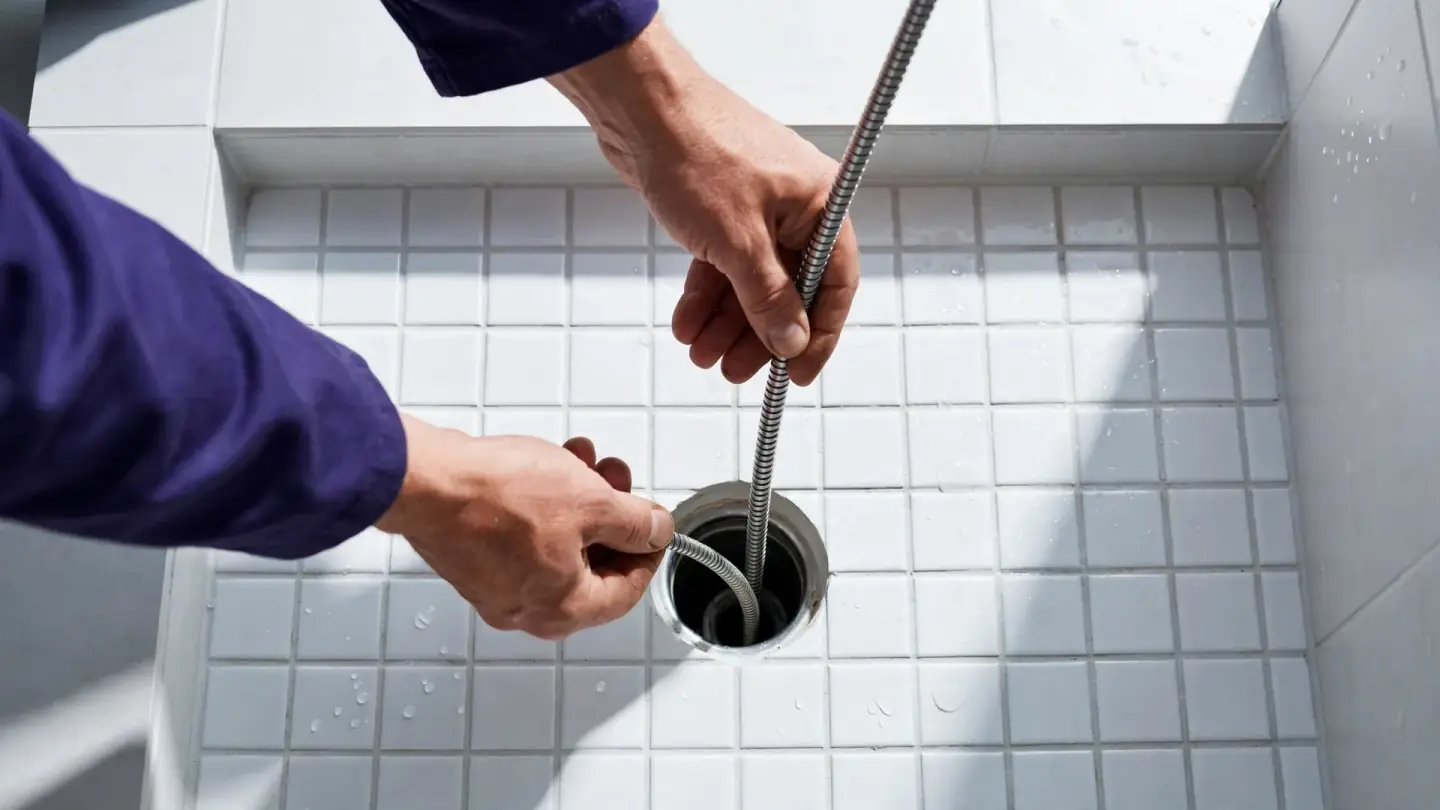
Common choices are a cleanout, a removed trap under a sink, a tub overflow or a floor drain. Sometimes a toilet is lifted to reach a larger line.
- 3
Clear first if needed
If the drain is fully blocked, water will hide the view. Many contractors open a path with a cable before filming.
- 4
Run the camera
The camera is pushed slowly through the line. The contractor watches for buildup, objects, joints and changes in direction.
- 5
Locate from above
Many cameras have a locator. The contractor can trace the head's position through the floor to show where a problem sits under the slab.
- 6
Explain and advise
You see what the camera saw and hear the options: cleaning, jetting, retrieval, monitoring or a repair.
Typical findings
What a camera often finds in interior lines
| Area | Common finding | Usual next step |
|---|---|---|
| Kitchen sink line | Grease coating mixed with food solids | Cleaning or jetting, plus kitchen habit changes |
| Bathroom sink | Hair and soap tangled near the trap | Hand tools or a small cable |
| Tub and shower | Hair mats and scale at fittings | Cable cleaning, sometimes scale removal |
| Laundry line | Lint and detergent residue | Cleaning; adding a lint catcher on the hose |
| Floor drain | Debris, dried trap, sediment | Clearing and refilling the trap |
| Line under slab | Sag holding water, or a damaged joint | Monitoring or repair discussion |
Findings vary from home to home; the contractor's explanation of your footage is what matters.
Henderson homes
Why are drain cameras so useful in Henderson homes?
Most Henderson homes are built on a concrete slab, not over a basement [1]. That means many kitchen, bath and laundry lines run underneath the floor where nobody can see them. A camera is the only practical way to look without breaking concrete.
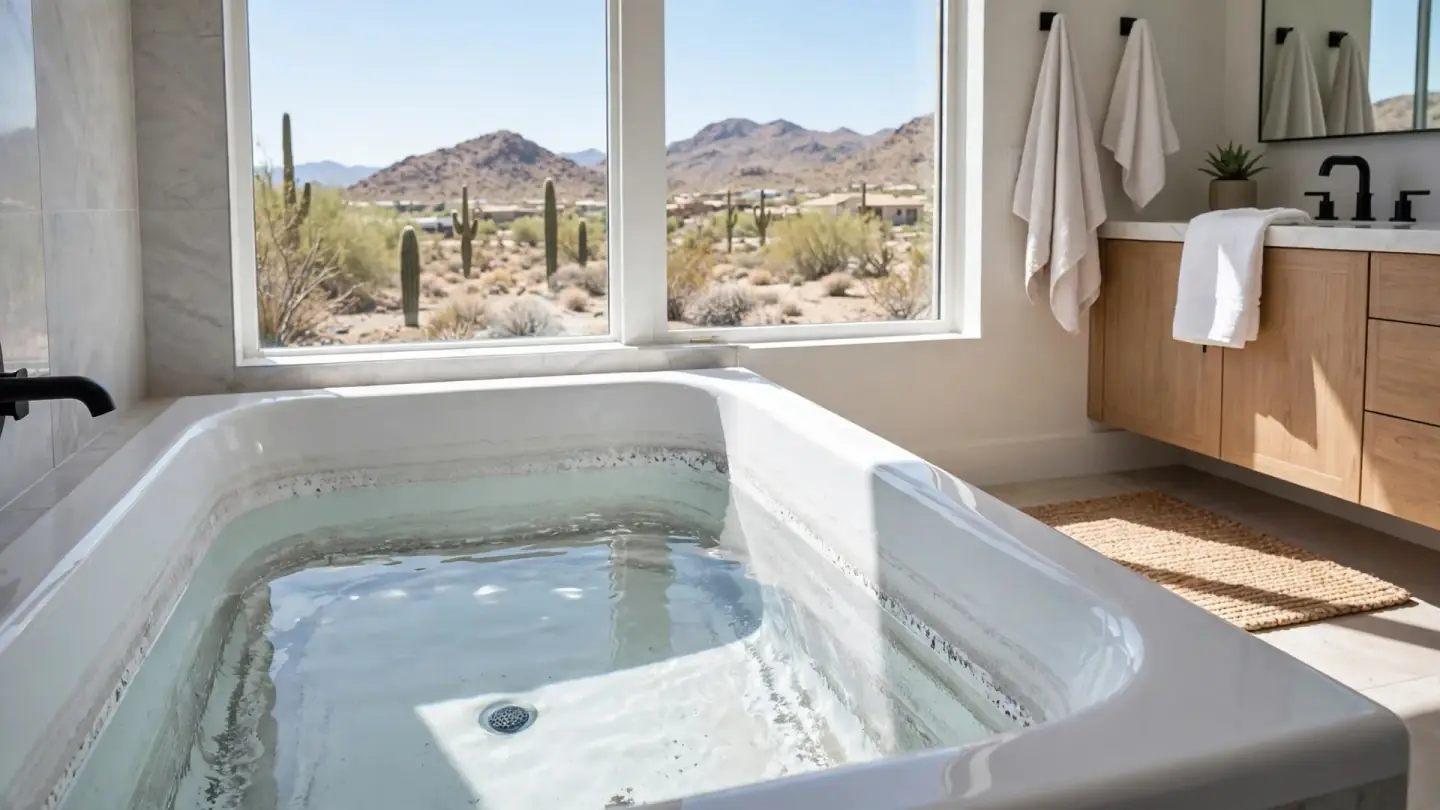
Hard water plays a part too. Henderson's water comes from Lake Mead and runs at approximately 16 grains per gallon [3]. Hard water leaves carbonate scale behind, and warm water speeds it up [4]. In showers, tubs and dishwasher lines, that scale can combine with soap and hair into a stubborn crust that a camera shows clearly.
Then there is the heat. Henderson summers average highs around 101°F in July [6], and the dry air speeds evaporation from traps in fixtures that sit unused, such as guest baths or a floor drain in the garage [5]. When a trap dries out, sewer odor can come into the room even though the pipe is clear. A camera visit can confirm that nothing else is going on.
If you are dealing with a line under the floor, the slab drain line clogs guide covers what to watch for.
Clog or something else?
Vents, traps and other non-clog causes
Not every slow or noisy drain has a blockage in it. A plumbing system needs air as well as water. Vents through the roof let air into the pipes so water can flow smoothly; when a vent is blocked, drains can slow and gurgle [2].
A camera helps sort this out. If the drain line looks clear on screen but the problem persists, the contractor may turn their attention to the vent or the trap instead.
That saves you from repeated cleanings that never get to the real cause.
- Clear pipe plus gurgling: think vent
- Clear pipe plus odor: think dry trap
- Water standing in one spot: think sag
Smart questions
What to ask during or after the camera work
- Where exactly is the problem, and how far from the drain opening?
- Is this buildup, an object, or damage to the pipe itself?
- Will cleaning solve it, or is it likely to return?
- Is the line under my slab affected, and can you mark the spot?
- Could a vent or trap be part of the problem?
- Can I keep a copy of the video or a few screenshots?
What comes next
Turning the footage into a plan
Most interior camera visits end with a straightforward fix. Hair and soap near a trap are cleared with hand tools. Grease in a kitchen line is cleaned or jetted; the hydro jetting page explains when water is the better tool.
If the camera shows a broken or badly sagging section, especially under the slab, the contractor will explain repair options and how urgent they are. Henderson uses a Southern Nevada-amended version of the 2024 Uniform Plumbing Code, and plumbing permits are issued by Building and Fire Safety [8]. Ask the contractor whether a permit applies to the work they suggest.
If the footage shows the problem is actually further out, in the building sewer, the next step is main sewer line cleaning. Remember that in Henderson the lateral to the street is the owner's responsibility, and the city maintains the main [7].
Room by room
How camera work differs from kitchen to garage
In the kitchen, the camera usually goes in after the sink trap is taken off. Kitchen lines often run along an outside wall and then drop under the slab, so the contractor watches for grease rings at bends and for food solids collecting in low spots. Homes with a garbage disposal tend to show more sludge along the bottom of the pipe.
In bathrooms, the lines are shorter but have tighter turns. Tub and shower drains are often reached through the overflow plate or by removing the strainer. Hair caught on a rough joint or scale ledge is one of the most common finds, and the slow-draining shower guide explains why it builds up so quickly.
Laundry and utility lines carry a lot of lint and detergent. Floor drains in garages or utility rooms may collect sand and grit tracked in from desert yards and driveways. In each case the camera shows whether a quick clean will do or whether something more is needed.
Whichever room it is, a drain camera inspection henderson homeowners schedule should end with a clear answer, not more guesswork.
Get ready
Simple ways to prepare for the visit
- Clear the cabinetEmpty the space under the sink so the trap is easy to reach.
- Note the patternJot down when the drain clogs, what was going down it and what has been tried.
- Skip chemicalsAvoid pouring drain cleaner before the visit; it makes the job harder and less safe for the person working on the line.
- Find any cleanoutsIf you know of a cleanout near the kitchen, laundry or garage, mention it.
FAQ
Drain camera inspection questions Henderson homeowners ask
Spoken questions about drain camera inspection, answered briefly. Other topics: [FAQ page](/faq/). Back to [the services overview](/services/).
What is the difference between a drain camera inspection and a sewer line inspection?
A drain camera inspection usually looks at interior branch lines from sinks, tubs and showers, while a sewer line inspection focuses on the main lateral running to the street. Both use a waterproof camera on a push cable. In Henderson the homeowner owns the lateral to the city main [7], so the two are often combined when a problem could be anywhere.
Can a drain camera go through a sink trap?
A drain camera usually cannot pass through a tight sink trap, so the trap is often removed or the camera enters through a cleanout instead. Traps hold a water barrier against sewer gas [5], and their sharp bend is a common obstacle for small cameras. The contractor you're connected with picks the access point that gives the clearest view.
Will I be able to watch the drain camera video myself?
Drain camera video can usually be watched live on the monitor while the inspection happens, and many contractors can record it. Ask before the visit whether a copy will be provided, since that helps if you need a second opinion or a repair quote later. Seeing the footage yourself makes it easier to understand roots, scale or sagging sections.
Does a drain camera inspection also clear the clog?
A drain camera inspection by itself does not clear a clog; the camera only shows what is inside the pipe. Many visits combine cleaning with a camera pass, either before to find the problem or after to confirm the line is open. Ask when booking which approach the local drain company plans, so you know what the visit includes.
Can a camera inspection find a drain problem under my concrete slab?
A camera inspection can often show cracks, separated joints or sags in drain lines under a concrete slab, which is common in Las Vegas Valley homes built slab-on-grade [1]. Many contractors use a locator to mark where the camera head sits on the floor above. That helps narrow any repair to a small area instead of guessing.
Should I get a camera inspection after a drain has only clogged once?
A camera inspection after a single clog is usually optional, but it can make sense if the clog was severe, came back fast or affected several fixtures. Henderson's hard water leaves scale in pipes over time [3][4], and a quick look can show whether buildup or damage is likely to cause repeat problems.
Can a drain camera tell me why my drains gurgle?
A drain camera can show whether gurgling comes from a partial clog, scale or a sag that holds water, but it cannot always see a vent problem directly. Blocked vents can make drains gurgle even when the pipe is clear [2]. If the camera finds a clean line, the contractor you're connected with usually checks the vent stack next.
Sources and citations
- [1]Las Vegas Advisor: Why Las Vegas houses don't have basements
- [2]Wikipedia: Drain-waste-vent system
- [3]City of Henderson 2024 Water Quality Report
- [4]Wikipedia: Hard water
- [5]Wikipedia: Trap (plumbing)
- [6]Wikipedia: Henderson, Nevada
- [7]City of Henderson: Water and sewer laterals
- [8]City of Henderson: Uniform Plumbing Code