
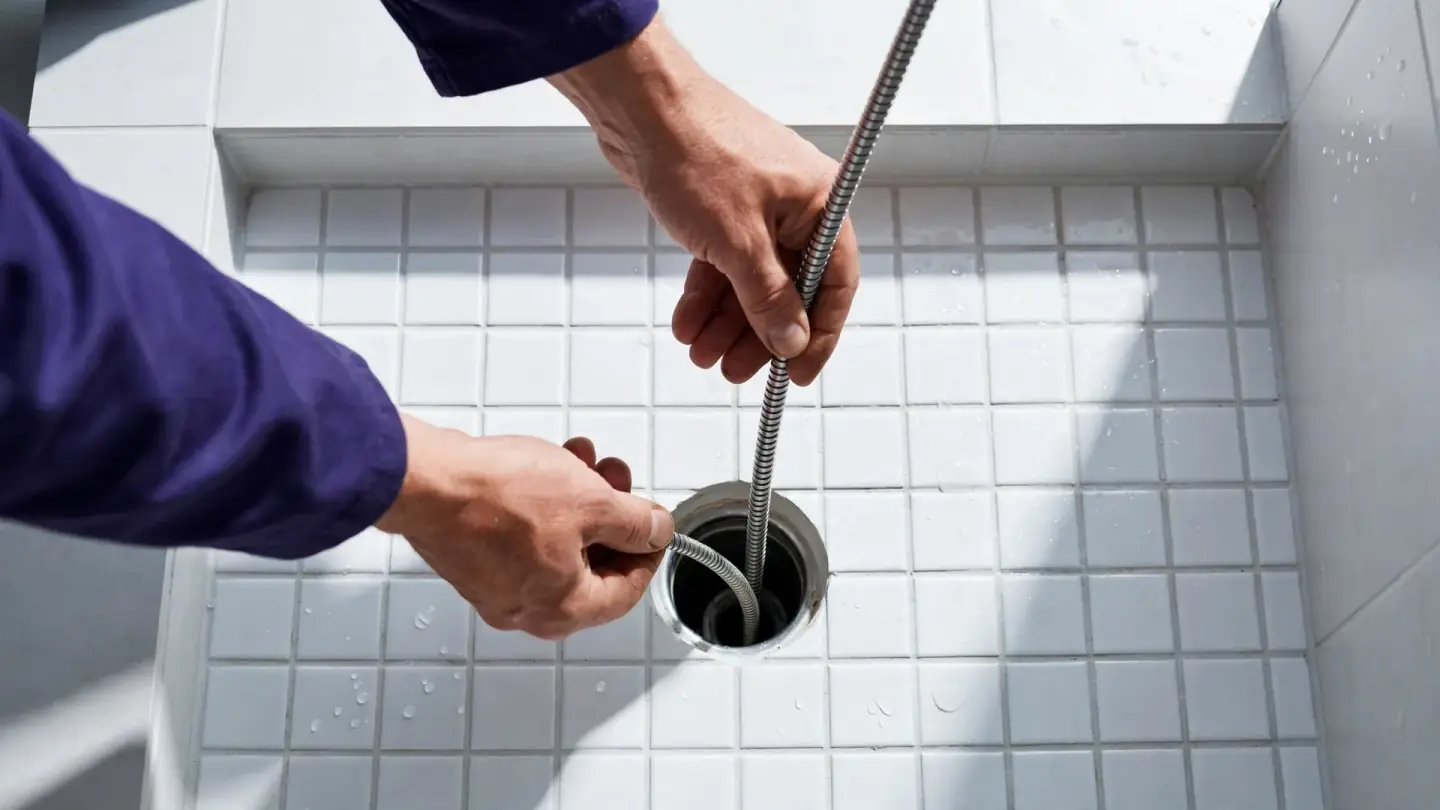
Key facts: Slow draining shower
- Henderson's water is very hard, at some 16 grains per gallon, well past the USGS cutoff of 180 mg/L [1][2].
- Warm water leaves more calcium and magnesium scale behind, which is why shower drains crust up sooner than many other fixtures [3].
- A trap's water seal blocks sewer gas, but it can dry out when a shower sits unused [4].
- Chemical drain cleaners are caustic or acidic, and mixing them with other products can be dangerous [5].
Usual suspects
Four reasons water pools at your feet
Start with the most likely cause and work down the list. Most homes never get past the first two.
- Most common
Hair wrapped in soap film
Strands catch on the grate crossbar and the pipe just below it, then soap residue glues them into a mat.
- Henderson factor
Mineral crust
Very hard water leaves a rough lining in the drain body and trap that grabs hair faster than a smooth pipe would [1][3]. [2]
- Less common
A partly blocked vent
If the drain gurgles as it empties, air may not be reaching the line properly. See our gurgling drains guide.
- Check if others are slow
A clog further down
When the tub, toilet and sinks all slow together, the blockage is past the shower, often in a shared branch or the main line.
Why it keeps happening
Why do showers clog more than sinks?
A shower handles more hair than any other drain in the house, and it gets it all at once, wet and tangled. Body wash and bar soap add a sticky film, and conditioner leaves a waxy coating that holds everything together.
Henderson adds another layer. Every drop comes from Lake Mead and carries plenty of calcium and magnesium [1]. Warm water drops those minerals more readily [3], so the pipe right under your shower gets a rougher wall each year. Rough walls catch hair that would slide past a newer pipe.
None of this means your plumbing is failing. A slow draining shower is usually just a sign that routine cleanup is overdue.
When the shower is fine but other drains are slow, read about clogged drain repair.
Try this first
Clear a sluggish shower in six safe steps
You will need a screwdriver, a plastic drain stick or bent wire hanger, gloves and a cup plunger. Leave the chemical bottle on the shelf.
- 1
Remove the grate
Most shower grates lift out or have one or two small screws. Set the screws in a cup so they do not disappear down the drain.
- 2
Pull out the hair mat
Slide a drain stick in a few inches, twist and pull slowly. Expect a gray, stringy clump; that is usually the whole problem.
- 3
Scrub the grate and drain body
Soak the grate in white vinegar to loosen mineral scale, then scrub the opening you can reach with an old toothbrush.
- 4
Plunge if needed
Cover the drain with a small cup plunger, add an inch of water, and use firm up-and-down strokes about ten times.
- 5
Flush and test
Run hot water for two minutes. Water should disappear without collecting around your feet.
- 6
Fit a hair catcher
A simple strainer over the grate keeps the next mat from forming in the first place.
Read the signs
What the symptom tells you
| What you notice | Likely cause | Next move |
|---|---|---|
| Only the shower is slow | Hair and soap near the grate | Follow the six steps above |
| Clears, then slows again within a week | Clog sits past the reach of a drain stick, or heavy scale | Small auger, or call for a professional cleaning |
| Gurgles or bubbles while draining | Vent problem or partial blockage downstream | Note which other fixtures gurgle, then call |
| Tub fills when the toilet flushes | Blockage in a shared branch or main line | Stop using water and call promptly |
| Sewage smell from a guest shower | Trap has dried out from disuse | Run water for a minute to refill the seal |
Desert detail
Spare showers and dry traps
Henderson summers bring average July highs near 101°F [7]. In a guest bath that nobody uses, the water sitting in the trap slowly evaporates. Once that seal is gone, sewer gas can drift up through the drain [4].
That smell is easy to confuse with a clog. Run the shower for a minute every couple of weeks to keep the trap full. If the odor stays after the trap is refilled, have the line checked.
A quick habit helps here: when you walk past the spare bathroom on your weekly tidy-up, turn the shower on briefly. That small step keeps the seal topped up through the hottest months.
When to call
Signs it is time for professional help
- The drain is still slow after you have cleared the grate and plunged.
- Water backs up into the tub or shower when a toilet is flushed or the washer drains.
- More than one bathroom is affected at the same time.
- You can hear gurgling in nearby fixtures or smell sewage that does not fade.
- Water is rising toward the edge of the pan and the room could flood.
What happens next
What will a contractor usually do about a slow shower?
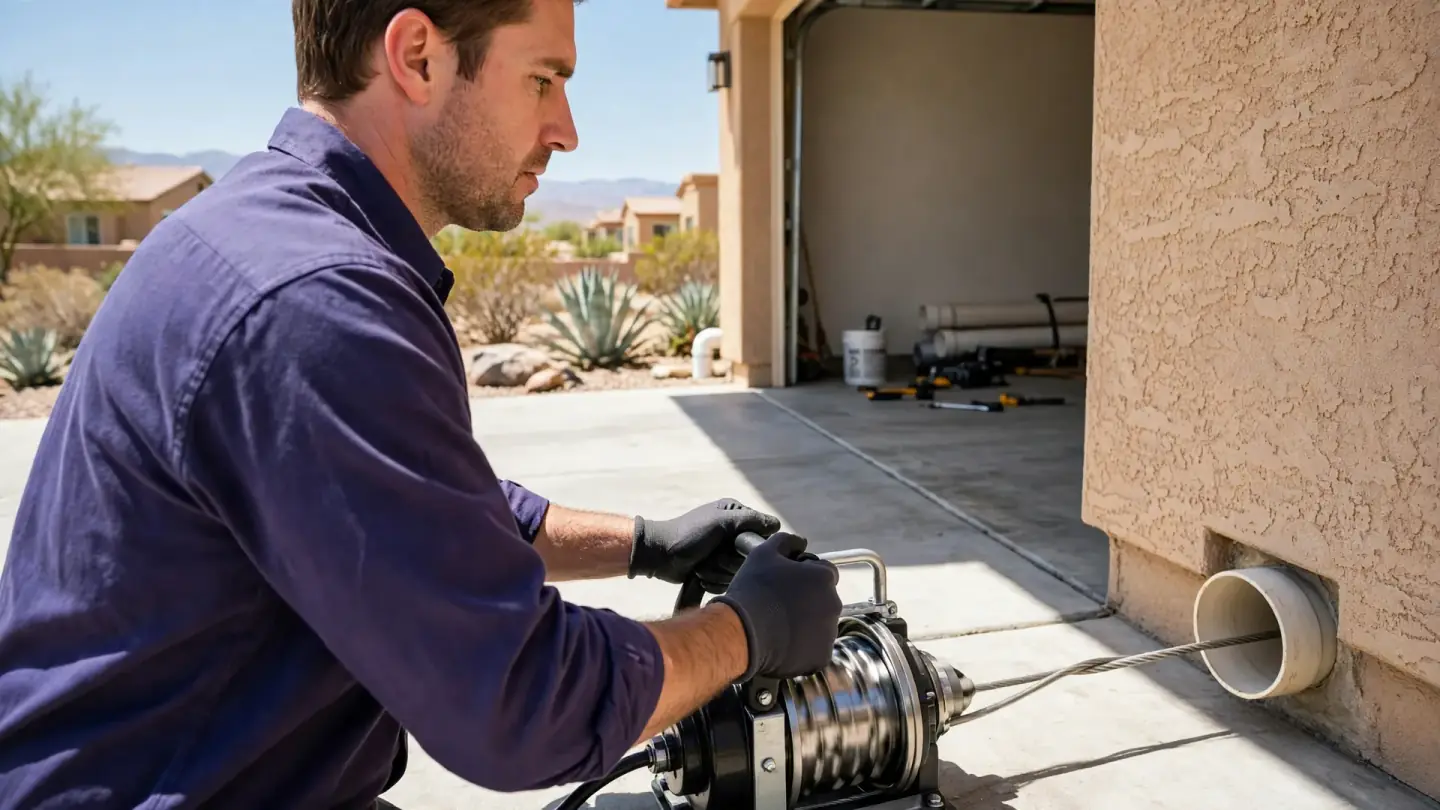
For a shower that is the only problem, the independent contractor will likely start with shower and bathtub drain cleaning, using a cable machine sized for small lines. If the line is badly scaled, they may suggest a camera look inside the drain to see how far the crust goes.
If several fixtures are involved, the job shifts to the branch or main sewer line. And if water is creeping out of the shower onto the floor, check availability for emergency bathroom drain cleaning.
FAQ
Slow shower drain questions Henderson households ask
Answers here focus on slow draining shower; see the [FAQ page](/faq/) for more. Back to [the guide library](/guides/).
Why does my shower drain slowly even after I pull the hair out?
A shower that stays slow after removing visible hair often has a deeper mix of soap scum and mineral crust lower in the trap. Henderson's very hard water, roughly 16 grains per gallon [1], helps that mix stick to pipe walls. A small plastic drain tool or hand snake usually reaches it; if not, the blockage may sit further down the branch line.
Why does a shower drain clog faster than a bathroom sink?
Shower drains often clog faster than bathroom sinks because warm water leaves more calcium and magnesium scale behind [3]. Showers also carry far more hair and soap than a typical sink. Combined with Henderson's very hard water, that scale gives hair and soap scum a rough surface to grip, so the drain narrows more quickly over months.
Can I use a chemical drain opener on a slow shower drain?
Chemical drain openers are strongly caustic or acidic, and mixing them with other products can be dangerous [5]. They can also sit in the trap if the clog doesn't move, making later cleaning hazardous. For a slow shower, mechanical options such as a drain hair tool or a small hand snake [6] are usually safer and more effective.
Why does my slow shower drain smell when it hasn't been used for a while?
A shower that sits unused can smell because its trap's water seal dries out, letting sewer gas rise [4]. In a Henderson summer that evaporation can happen faster than people expect. Running water for a minute refills the seal. If the smell continues while the shower drains slowly, a partial clog may be holding odour-causing buildup in the trap.
Is standing water around my feet in the shower a sign of a bigger problem?
Standing water in the shower pan usually means a partial clog in the shower trap, which is common and often fixable at home. The problem becomes a bigger concern when other fixtures also drain slowly or the tub rises when a toilet flushes, which points to the main line. Check a nearby sink: if it drains normally, the issue is likely local.
How long should a shower take to drain after I turn it off?
A healthy shower usually drains within a few seconds of shutting off the water, leaving no pool in the pan. If water lingers for a minute or more, the drain is partly restricted. Gradual slowing over weeks typically means hair and scale building up, while a sudden change can point to an object or a blockage further downstream.
When should I call someone about a slow draining shower?
A slow draining shower is worth a call when home clearing hasn't helped, the drain slows again within days, or other fixtures act up too. Those signs suggest the blockage is beyond the trap. Calling connects you with a local drain company; mention what you've already tried, including any products poured in, so the contractor can work safely.