

Key facts: Bathroom Drain Cleaning
- A sink trap holds a small water seal that blocks sewer gas, and that seal can evaporate when a fixture goes unused [1].
- Henderson's tap water is very hard, carrying calcium and magnesium picked up from the Colorado River on the way to Lake Mead [2].
- The USGS classes water above 180 mg/L as calcium carbonate as very hard [3].
- Blocked or restricted vents can make drains gurgle and run slowly even without a solid clog [4].
Overview
What does bathroom drain cleaning cover?
This page is about bathroom sinks: vanity basins, pedestal sinks and the double vanities common in primary bathrooms. Tubs and showers have their own page on shower and bathtub drain cleaning, and toilets are covered under toilet drain clearing.
Bathroom sinks carry much less volume than kitchens, but the waste is stickier than it looks. Hair binds with toothpaste and soap, and every rinse leaves a little more on the parts under the drain. The good news is that most of these clogs sit close to the surface and are easy to reach.
Several fixtures slowing at once points beyond the vanity; see clogged drain repair for how contractors trace it.
Anatomy
Four small parts where vanity clogs hide
Knowing these pieces makes it much easier to describe the problem when you call.
Pop-up stopper
The plug that rises and falls when you pull the lift rod. Its stem sits right in the drain, and hair wraps around it like thread on a spool.
Pivot rod
A horizontal rod behind the drain pipe that moves the stopper. Hair and gunk collect where it passes through the pipe, and a loose nut here can leak.
Overflow channel
The small hole near the top of the basin. It leads to a hidden passage that joins the drain below. It fills with soap film and mineral crust and can smell even when the drain is clear.
Vanity P-trap
The curved pipe inside the cabinet. It keeps sewer gas out with a water seal [1], and it is where heavier debris such as caps, jewelry and clumps of hair settle.
Signs
Clues your bathroom sink is clogging
Water pools while you brush
The basin holds an inch of water during a two-minute brush and then slowly empties.
Stopper will not seal or lift
Debris on the pivot rod jams the mechanism, so the stopper stays half open or will not close.
Musty smell from the overflow
Soap, hair and mineral crust in the overflow channel break down and give off an odor near the basin.
Both sinks slow on a double vanity
If both basins drain poorly, the clog is likely where their lines join or further down in the wall.
Gurgling after the sink empties
A partly blocked trap or a restricted vent pulls air through the water as it drains [4].
White crust around the drain
Visible scale on the drain flange is a hint that the inside of the trap is crusted too.
Local factors
Does Henderson's hard water clog bathroom sinks faster?
Hard water does a lot of quiet damage in bathrooms. Henderson's supply originates in the Colorado River and is drawn from Lake Mead and carries enough calcium and magnesium to reach some 16 grains per gallon [2]. That is far into the very hard range by USGS standards [3].
The minerals do not harm your health, but they react with soap to form a sticky scum and leave a chalky scale on metal parts [5]. On a vanity, that means the stopper stem, pivot rod and overflow passage all grow a rough coating. Hair catches on that coating far more easily than it would on clean pipe. Our hard water scale guide explains the chemistry in plain terms.
Climate plays a part in guest bathrooms. Henderson summers are long and very hot, with July highs around 101°F [6]. A powder room that sits unused for weeks can lose its trap seal to evaporation [1], and the sewer smell that follows is often mistaken for a clog. Running the tap for a few seconds every week or two prevents that.
Most homes here are on concrete slabs, so the bathroom branch line runs into the slab after it leaves the wall [7]. Sink clogs rarely go that deep, but when two bathrooms slow down together, the problem may be in the shared line under the floor rather than in either vanity.
Do it yourself
Simple fixes worth trying first
Many bathroom sink clogs are a ten-minute job. Here is a safe order to try things.
- Pull and clean the stopperSome lift straight out. Others need you to loosen the pivot nut behind the drain pipe under the sink. Wipe off the hair and gray film, then put it back.
- Use a plastic barbed stripThose thin plastic drain tools from the hardware store pull hair out of the top few inches of the drain without scratching anything.
- Plunge with the overflow coveredHold a wet cloth tightly over the overflow hole, then use a small cup plunger. Without blocking it, air just escapes through the overflow.
- Brush the overflow channelA small bottle brush and hot soapy water clear much of the film from the overflow, which helps with odors.
- Empty the trapPut a bucket underneath, unscrew the two slip nuts on a plastic trap and rinse it out. Check the washers are seated when you reassemble.
The visit
How a contractor handles a vanity clog
- 1
Check flow and the other fixtures
Running the sink alongside the nearby tub and toilet shows whether the clog is local to the vanity or shared down the line.
- 2
Remove the stopper assembly
The pop-up and pivot rod come out for cleaning. Worn or scaled parts may be replaced so the stopper seals and lifts properly.
- 3
Clear the trap and arm
The P-trap is removed and cleaned, and the trap arm going into the wall is checked for buildup.
- 4
Auger the wall line
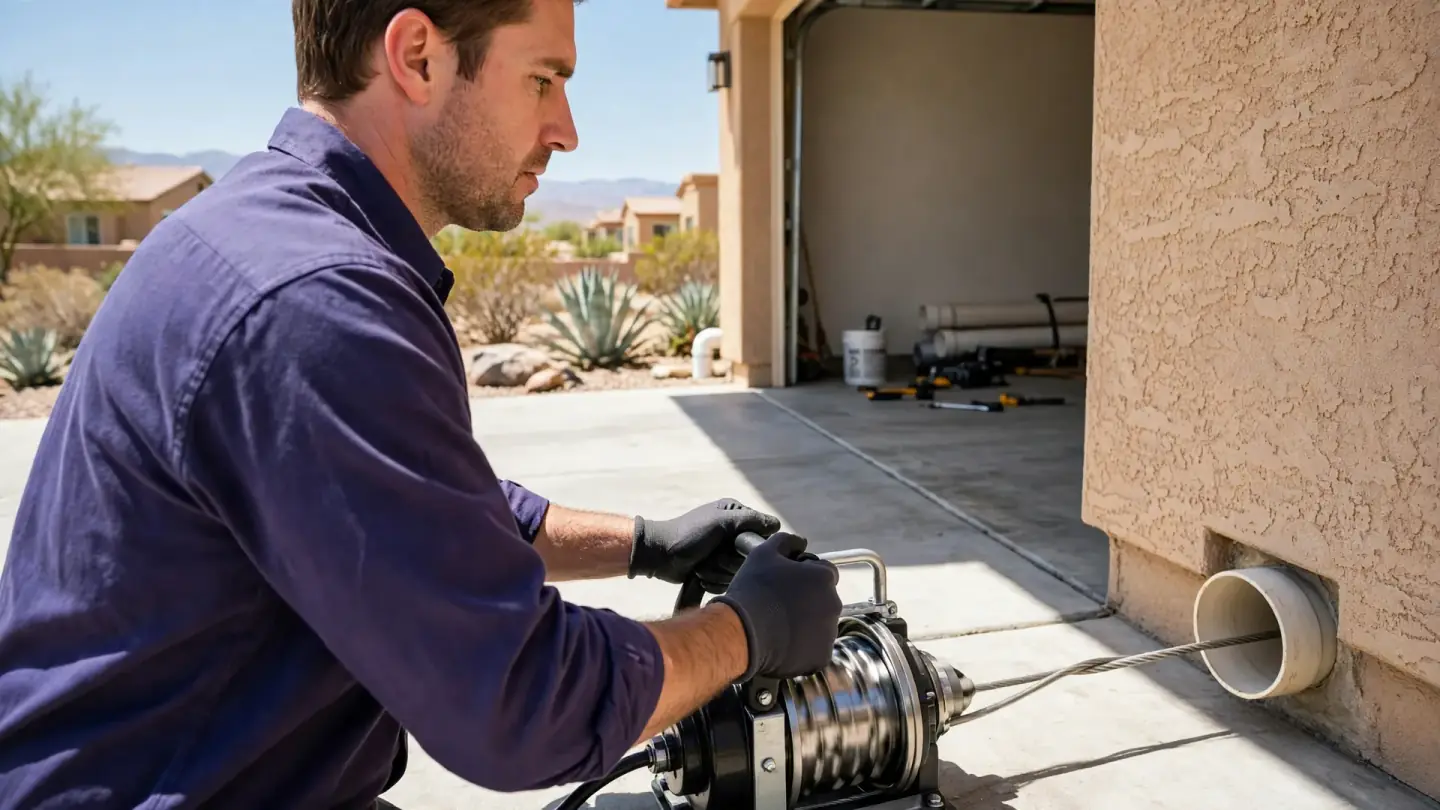
A small hand or drum auger goes through the trap opening into the branch line to break up anything further in [9].
- 5
Clean the overflow
The overflow passage is flushed and brushed so it drains freely and stops smelling.
- 6
Reassemble and leak-test
Everything goes back together with good washers, then the basin is filled and drained a few times while the contractor watches for drips.
Quick reference
What the clog likely is, by what you see
| Symptom | Most likely cause | Typical fix |
|---|---|---|
| Slow drain, stopper covered in hair | Hair on stopper stem | Clean or replace the pop-up |
| Stopper stuck halfway | Gunk or scale on the pivot rod | Clean, adjust or replace the rod |
| Smell but drains fine | Dirty overflow or dry trap | Clean overflow; run water regularly |
| Slow even after stopper is cleaned | Packed P-trap or trap arm | Remove trap; auger the wall line |
| Two vanities slow together | Shared branch line | Auger from a cleanout or trap |
| Bathroom sink and tub both slow | Line under the slab | Contractor evaluation, possibly camera |
Repair or replace
When the drain parts themselves are the problem
Sometimes the sink is not really clogged at all. A pop-up stopper whose stem has corroded, a pivot rod that no longer lifts the plug far enough, or a trap washer that has hardened can all make a basin drain slowly or leak under the cabinet.
Years of hard water speed this up. Chrome finishes wear through, brass threads seize, and plastic slip nuts crack when someone overtightens them. In older bathrooms, for example in homes built during the early decades of Green Valley, the original drain assembly may simply be worn out [10].
Replacing a vanity drain assembly or trap is a small job for the contractor, and it often fixes a slow drain more lastingly than another cleaning. In hillside communities like Anthem, where home sales began in the late 1990s, many original assemblies are now reaching that age too [11].
If the contractor suggests replacing parts, ask to see the old ones. A crusted stem or cracked washer makes the reason obvious.
Prevention
Keeping vanity drains running
A few habits make a real difference. Rinse the basin with hot tap water after shaving and brushing. Pull and wipe the stopper once a month, especially in a busy family bathroom. Keep cotton swabs, floss and hair from brushes in the trash.
Wipe the drain flange and overflow during your regular cleaning so scale does not build into a crust. If you have a water softener, it reduces new scale but will not remove what is already in the pipes.
If your bathrooms clog repeatedly, ask about preventative drain maintenance. A periodic visit that cleans traps and runs the lines often heads off the next slowdown.
Urgent cases
When a bathroom clog needs quick attention
A slow vanity is not an emergency. It becomes urgent when water comes up in the sink as a toilet is flushed, when a basin overflows onto the floor or into the cabinet, or when every fixture in the bathroom backs up at once. Those signs point to a deeper blockage, often in a shared line.
In those cases, stop running water in that bathroom and see the emergency bathroom drain cleaning page. Call to check emergency availability. If backups appear in several rooms, read our main sewer backup signs guide as well.
FAQ
Bathroom sink and vanity drain questions from Henderson homeowners
Spoken questions about bathroom drain cleaning, answered briefly. Other topics: [full FAQ](/faq/). Back to [all drain services](/services/).
Why does my bathroom sink smell like sewage even though it drains fine?
A bathroom sink that drains fine but smells of sewage usually has a dried-out trap seal or a vent problem. The trap holds a small plug of water that blocks sewer gas, and that water can evaporate in a sink nobody uses [1]. Running the tap for a minute often settles it; if the odor returns quickly, the contractor you're connected with can check the trap and vent.
Why do both sinks in my double vanity drain slowly at the same time?
Double vanity sinks that slow down together usually share a drain line, so the clog often sits past the point where the two branches join. A partly blocked vent can also make both basins drain sluggishly and gurgle without a solid clog [4]. Clearing just one trap rarely fixes a shared restriction, so the local drain company typically works further down the branch line.
Can Henderson's hard water narrow my bathroom sink drain over time?
Henderson's hard water can slowly narrow a bathroom sink drain because dissolved calcium and magnesium leave scale that traps hair and soap [2]. The USGS classes water above 180 mg/L as calcium carbonate as very hard [3]. Scale alone rarely seals a pipe, but it gives everyday debris something to cling to, which is why the same vanity often clogs again.
How do I clean the hair out of a pop-up sink stopper?
A pop-up sink stopper usually comes out by loosening the pivot rod nut behind the drain under the vanity, then lifting the stopper free. Hair wrapped around the stopper stem is a common cause of slow bathroom sinks. If the basin is still slow after the stopper and trap are clean, the clog is usually deeper in the wall line, where a small hand auger is often used [9].
Should I pour chemical drain opener into a slow bathroom sink?
Chemical drain opener is usually a poor first choice for a slow bathroom sink because it can sit in the trap and splash back when the pipe is opened later. Mixing different cleaners can also cause dangerous reactions [8]. A plunger with the overflow hole covered, or pulling the stopper, tends to be safer, and a mechanical clearing is the usual next step.
Is a vanity that burps air while the tub empties a vent problem?
A bathroom sink that gurgles while the tub drains usually means air is being pulled through its trap because the shared line or vent is restricted. Drain-waste-vent systems need air to flow behind the water, and a blocked vent can cause gurgling even without a full clog [4]. The contractor you're connected with can check whether the problem is the branch line or the vent.
Do older Green Valley bathrooms clog more than newer ones?
Older Green Valley bathrooms can clog more often simply because their drains have carried decades of hard-water scale, hair and soap, though age alone is never a diagnosis. Green Valley was one of Henderson's early master-planned communities [10]. Original fittings, narrower stoppers and long-term buildup often add up, so a camera look may be worthwhile when the same sink keeps slowing.
Sources and citations
- [1]Wikipedia: Trap (plumbing)
- [2]City of Henderson 2024 Water Quality Report
- [3]USGS: Water hardness FAQ
- [4]Wikipedia: Drain-waste-vent system
- [5]Wikipedia: Hard water
- [6]Wikipedia: Henderson, Nevada
- [7]Las Vegas Advisor: Why Las Vegas houses don't have basements
- [8]Wikipedia: Drain cleaner
- [9]Wikipedia: Plumber's snake
- [10]Wikipedia: Green Valley, Henderson
- [11]Wikipedia: Anthem, Henderson