
Key facts: Main Sewer Line Cleaning
- In Henderson, the homeowner is responsible for the pipe carrying waste from the house to the city sewer, known as the lateral, and the city is in charge of the street main [1].
- Henderson's water is drawn from Lake Mead, which the Colorado River feeds and carries calcium and magnesium that make it hard, at around 16 grains of hardness per gallon [4].
- Most local homes are built slab-on-grade, so drain lines run under or within the concrete slab rather than through a basement [3].
- A plumber's snake, or drain auger, is a flexible cable that is fed into a pipe to break up or pull out blockages [5].
The basics
What the main sewer line actually is
Every drain in your home, from the kitchen sink to the upstairs shower, feeds into one larger pipe. Plumbers call it the building sewer or main line. It leaves the house, runs under the yard and connects to the public sewer main under the street.
In Henderson, the part between your house and that public main is called the sewer lateral, and it belongs to you. The City of Henderson's Department of Utility Services looks after the main in the street, while the owner of the property is responsible for keeping the lateral working [1].
That split matters. If your line is clogged, the city will not clean it for you. Main sewer line cleaning henderson homeowners arrange is private work on private pipe, done by a contractor you choose.
Because one pipe serves the whole house, a blockage here is different from a clog in a single fixture. It can affect every drain at once, and wastewater can come back up at the lowest opening in the home.
Warning signs
Signs the trouble is in the main line, not one drain
One slow sink is usually a branch-line problem. These patterns point further down the system.
Several fixtures slow together
The tub, toilet and sink all drain sluggishly in the same week. A shared downstream pipe is the common link.
Toilet flush affects the tub
Flushing makes water rise or bubble in the shower or bathtub, because the water has nowhere to go but back up the nearest opening.
Gurgling from low drains
Air being pushed through the trap water makes bubbling sounds. Read more in the gurgling drains guide.
Water at the cleanout
If you lift the outdoor cleanout cap and see standing water inside, the line beyond it is not flowing freely.
Sewer smell indoors
A steady sewage odor near floor-level drains can mean slow flow and trap seals being disturbed.
Washer drain overflows
A laundry discharge puts a lot of water into the system quickly, so it is often the first place a main-line restriction shows itself.
Access point
Why the cleanout is where the work starts
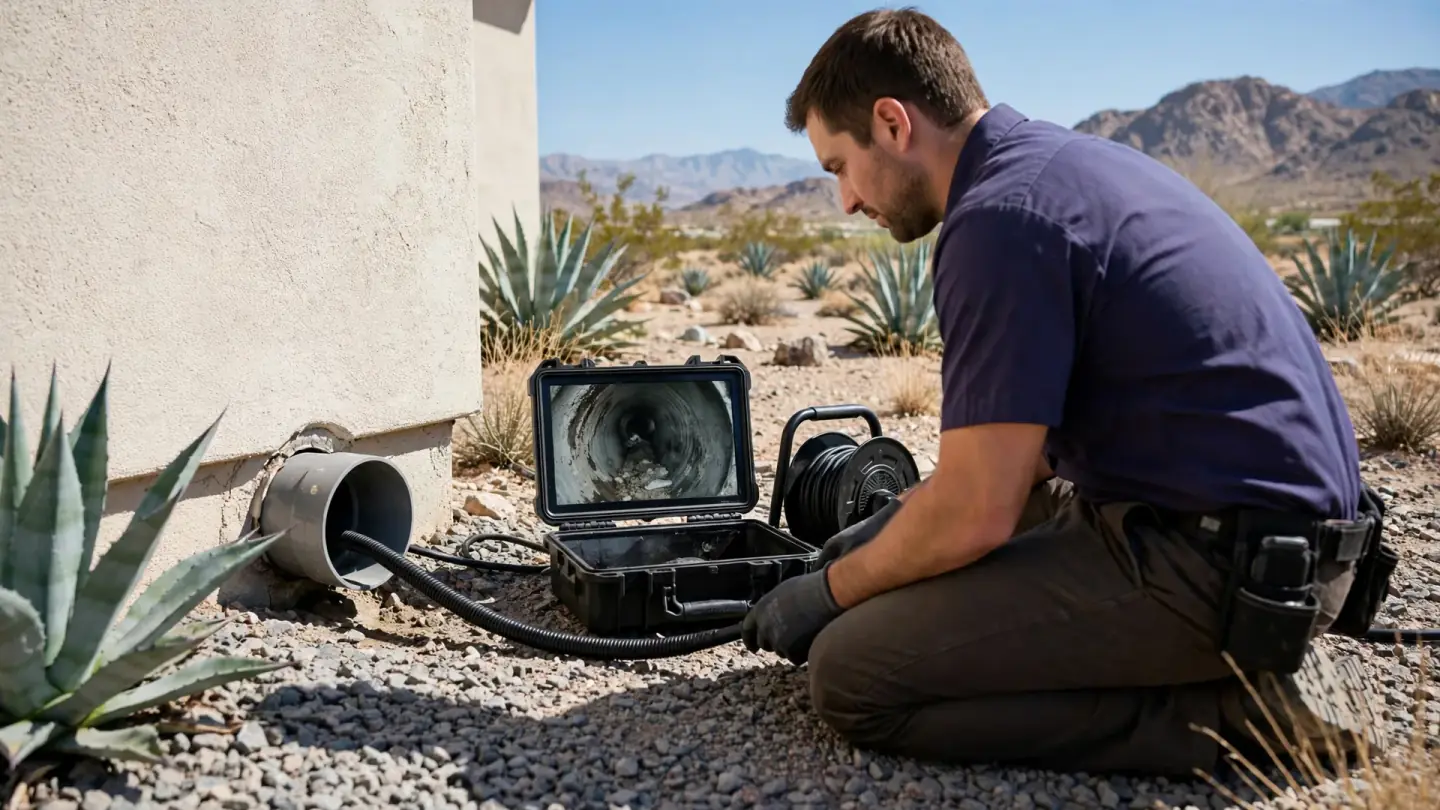
A cleanout is a capped pipe fitting that opens straight into the building sewer. On many Henderson homes it sits outside near the front or side wall, often in gravel or a planter bed. Some homes have an additional one indoors or near the garage.
Working through the cleanout lets the contractor reach the main line directly, without pulling a toilet or feeding a cable through a small sink trap. It also lets them see whether the blockage is upstream (toward the house) or downstream (toward the street).
If you do not know where yours is, a quick look along the foundation for a round cap, usually three or four inches across, is a good start. The independent contractor can locate it if it is buried or hidden by landscaping.
- Keep the cap visible and clear of rocks and pavers
- Never open it if water is already pushing out under pressure
- Tell the contractor if a cap is cracked or missing
On the day
How a contractor typically cleans a main line
Every job is a little different, but most visits follow a pattern like this.
- 1
Ask about the history
Expect questions about which drains are affected, when it started, whether it has happened before and what was done last time.
- 2
Find and open the cleanout
The contractor locates the best access point, checks for standing water and opens it carefully so any backed-up water drains out in a controlled way.
- 3
Choose the tool
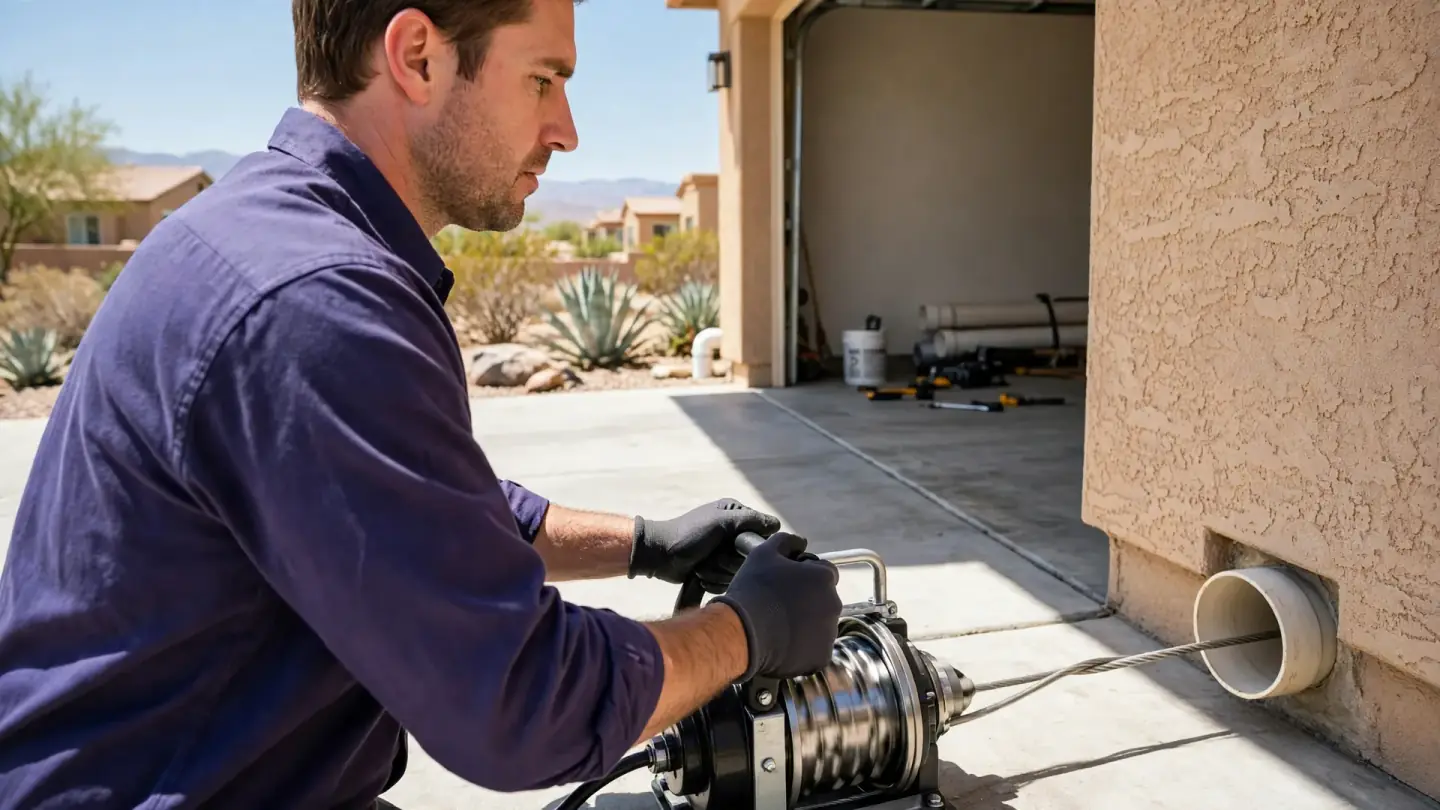
For most main-line clogs, a powered drain cable with a cutting head is the first choice. For heavy scale or grease, a water jet may be suggested instead or afterward.
- 4
Clear the blockage
The cable is fed through the line until it meets resistance, then worked through the clog. The contractor runs water to confirm that flow has returned.
- 5
Check the result
Many contractors offer a camera look after cleaning, so you can see whether the pipe is clear and whether there is damage worth knowing about.
- 6
Explain what they found
A good contractor tells you what caused the stoppage, shows you any debris pulled out and explains whether it is likely to come back.
Methods
Cable or water jet for the main line?
Both methods are common. Which one fits depends on what is in the pipe.
| Method | How it works | Often used for |
|---|---|---|
| Powered drain cable (auger) | A rotating steel cable with a cutting head bores through the blockage [5] | Paper and wipes clogs, soft obstructions, restoring flow quickly |
| Hydro jetting | A hose with a high-pressure nozzle sprays water to scour the pipe wall [6] | Grease, sludge, mineral scale, lines that keep re-clogging |
| Cable then camera | Clear first, then inspect with a camera | Repeat stoppages, older lines, before deciding on repairs |
| Hand tools at a fixture | Plunger or small auger at one drain | Single-fixture clogs, not main-line problems |
Chemical drain cleaners are a poor match for a main line; they are caustic or acidic and can be dangerous to mix [6].
Local conditions
What makes Henderson sewer lines different
All of Henderson's water is Colorado River water stored in Lake Mead. On the way, it picks up calcium and magnesium, which make it hard, at roughly 16 grains per gallon [4]. Those minerals are harmless to drink, but over years they can leave a crust inside pipes that narrows the opening and gives debris something to cling to.
Most homes here sit on a concrete slab rather than over a basement [3]. That means the drain lines under the house are buried in or beneath the slab, and the main line leaves through the foundation before running out to the street. A good outdoor cleanout becomes the most practical way in.
The ground itself is another factor. Much of the Las Vegas Valley sits on cemented calcium-carbonate soil known locally as caliche, which makes digging slow and difficult [2]. That is one reason most contractors try to solve a main-line problem from the inside, with cleaning and a camera, before anyone talks about excavation.
If you want to understand mineral buildup in more depth, the hard water scale guide covers how it forms and what helps. For lines under the house, see the guide to slab drain line clogs.
Common causes
What usually blocks a building sewer
- Wipes and paper productsSo-called flushable wipes do not break down like toilet paper and tend to snag and pile up.
- Cooking greaseFat poured down a kitchen sink cools, sticks to the pipe wall and catches everything that follows.
- Mineral scaleHard-water deposits roughen and narrow the pipe over time, especially in older lines.
- Settled or offset pipeA section that has sunk or shifted creates a low spot or a lip where solids collect.
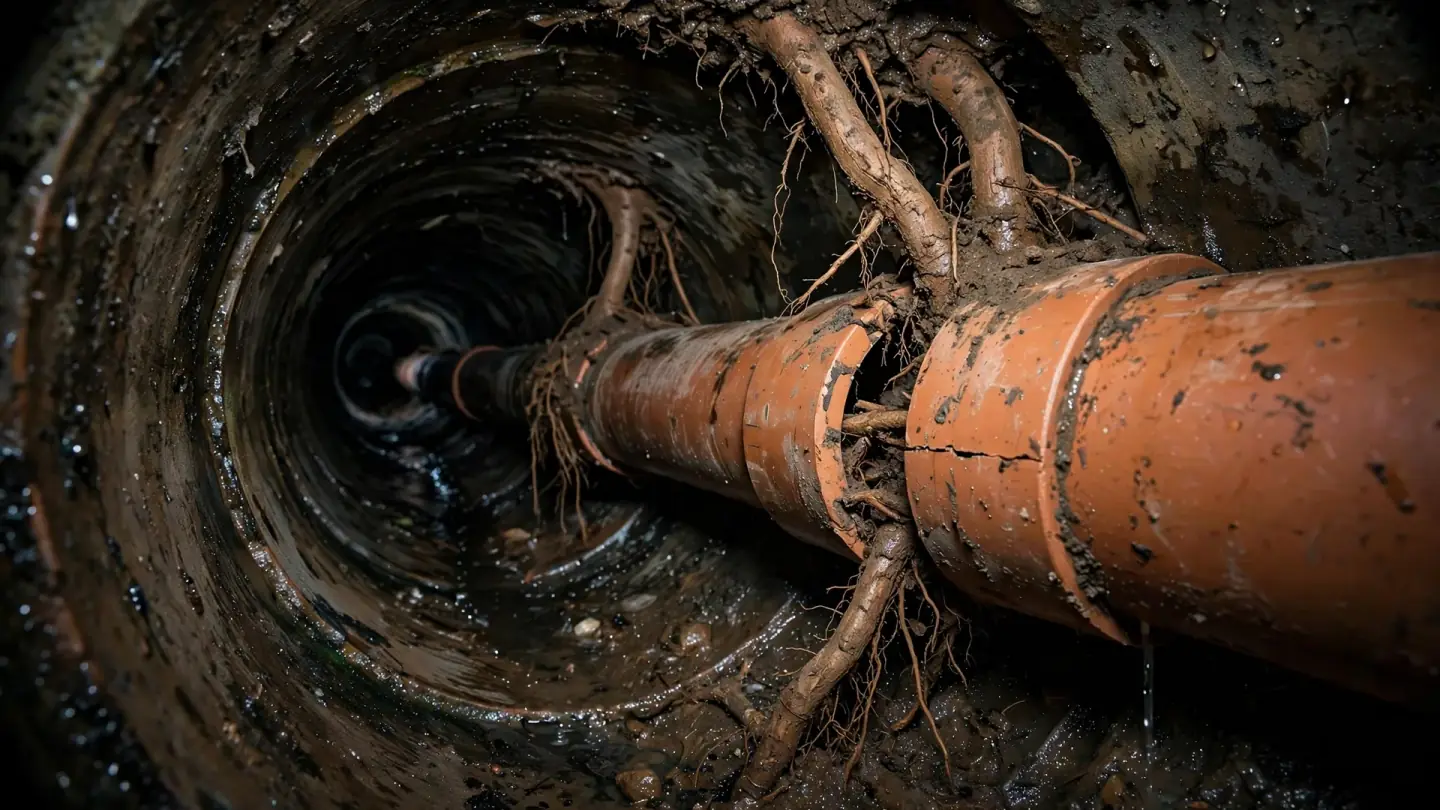
- RootsLess common in desert yards than in wetter cities, but landscape trees and shrubs near the line can still find a loose joint.
- Construction debrisOn some newer homes, leftover grout, gravel or packaging has been found in lines years later.
Before you hire
Questions worth asking the contractor
You do not need to be a plumbing expert to ask good questions. These help you understand the job and what comes next.
- Will you work through the outdoor cleanout, or do you need to pull a toilet?
- Which tool do you plan to use first, and why?
- Can you show me camera footage after the line is clear?
- If you find a damaged section, what are my options, and does any repair need a permit?
- How likely is this to happen again, and is there anything I can do to help prevent it?
- Is the problem on my lateral, or could it be at the city main?
After cleaning
When cleaning turns into a repair
Sometimes a camera shows that the line is cracked, separated or badly sagging. Cleaning restores flow, but it cannot fix a broken pipe. In that case, the contractor will usually explain repair options and how urgent they are.
Henderson builds under the 2024 edition of the Uniform Plumbing Code plus the regional Southern Nevada amendments, and plumbing permits are issued by Building and Fire Safety [7]. The contractor can check the permit question for you to the repair you choose.
If the blockage turns out to be in the city's main rather than your lateral, the City of Henderson's Utility Services department is the contact. It runs a Customer Care Center at City Hall on Water Street and has an after-hours emergency contact for the public system [8].
A sewer line inspection is the next step if you want a full picture of the lateral before deciding anything.
FAQ
Main sewer line cleaning questions Henderson homeowners ask
Spoken questions about main sewer line cleaning, answered briefly. Other topics: [voice-answer hub](/faq/). Back to [all drain services](/services/).
What are the signs my main sewer line needs cleaning?
A main sewer line usually needs cleaning when several drains slow down together, toilets gurgle, or water backs up into a tub or floor drain when other fixtures run. The lowest fixtures often show symptoms first. Henderson homeowners are responsible for the lateral from the house to the city main [1], so clearing that line is the owner's job.
Will the City of Henderson clean my sewer line for me?
The City of Henderson cleans and maintains the public sewer main in the street, but not the private lateral running from your house to that main [1]. If you suspect the blockage is in the city main, contacting Henderson's Utility Services Customer Care Center is the usual step [8]. Otherwise a private drain contractor handles the lateral.
Does my house need a sewer cleanout for main line cleaning?
Main line cleaning is usually easiest through an outdoor sewer cleanout, which gives direct access to the lateral without going through a toilet or fixture. Many Henderson homes have one near the foundation. If yours is buried or missing, the contractor you're connected with can explain options, and installing one may involve permitting [7].
Is a cable auger or hydro jetting better for a main sewer line?
A cable auger usually works well for a single main sewer line blockage, while hydro jetting is often preferred for grease, sludge or scale along the pipe. A snake is a flexible cable that breaks up or pulls out blockages [5]. Many contractors start with a cable and use jetting if the line keeps clogging.
How often should a Henderson main sewer line be cleaned?
A Henderson main sewer line usually only needs cleaning when problems appear, though homes with roots or repeat clogs often benefit from a periodic schedule. Henderson's hard water leaves scale that narrows pipes over time [4]. A camera inspection after cleaning helps decide whether routine maintenance is worthwhile.
Why does caliche soil matter for sewer line work in Henderson?
Caliche soil matters because Southern Nevada's cemented soils make digging difficult [2], so sewer contractors usually try cleaning and camera work before any excavation. Clearing a lateral from a cleanout avoids breaking hard ground. If a repair is needed, seeing the problem first helps keep digging to a smaller area.
Can tree roots get into a main sewer line in the desert?
Tree roots can get into a main sewer line even in the desert, because the pipe offers moisture that roots seek out. Roots usually enter through cracks or loose joints. Cleaning clears roots temporarily, and a camera look afterward helps show whether the pipe has an entry point that will let them return.
Sources and citations
- [1]City of Henderson: Water and sewer laterals
- [2]UNLV: Engineering with heavily cemented soils in Las Vegas
- [3]Las Vegas Advisor: Why Las Vegas houses don't have basements
- [4]City of Henderson 2024 Water Quality Report
- [5]Wikipedia: Plumber's snake
- [6]Wikipedia: Drain cleaner
- [7]City of Henderson: Uniform Plumbing Code
- [8]City of Henderson: Utility Services Customer Care Center