
Key facts: Commercial Drain Cleaning
- Under Henderson Municipal Code 14.09, restaurants and similar food operations are required to fit and service grease interceptors, and each interceptor may serve only one business [1].
- The locally adopted Uniform Plumbing Code also requires interceptors where waste is laden with grease [1].
- Henderson has adopted the 2024 Uniform Plumbing Code as amended for Southern Nevada, and Plumbing permits come from the city's Building and Fire Safety department [6].
- Property owners are responsible for the sewer lateral to the city main, while the City of Henderson maintains the main [4].
The difference
Why do business drains need a different approach?
Commercial plumbing works harder than a home system. A restaurant kitchen can send grease, starch and detergent down its drains from opening to close. An office tower has dozens of restrooms sharing the same stacks. An apartment building has many households flushing into one building sewer.
That heavier use means buildup forms faster, and when something blocks, more people are affected. The work itself is similar to residential drain cleaning, but planning, scale and local rules matter far more.
Commercial drain cleaning henderson businesses arrange usually falls into three groups: food service, offices and retail, and multi-unit residential. Each has its own pressure points.
Who it serves
Common types of commercial property
Restaurants and cafes
Grease lines, floor drains, prep sinks, dish machines and grease interceptors. Buildup is constant and needs routine attention.
Offices and retail
Restroom stacks, break-room sinks and roof drains. Problems usually come from paper products and items that should not be flushed.
Apartments and condos
Shared building sewers, many kitchens on one line and tenants with different habits. One stoppage can affect several units.
Medical and dental offices
Many sinks and specialty fixtures, and a strong need to keep restrooms and treatment rooms working during patient hours.
Gyms and salons
Showers and sinks that collect large amounts of hair, product residue and hard-water scale.
Schools and churches
Heavy use on some days, little on others. Traps in rarely used rooms can dry out and let odors through.
Food service
Henderson's grease interceptor rules in plain English
The City of Henderson runs a pretreatment program aimed at keeping fats, oils and grease out of the public sewer. Under Henderson Municipal Code 14.09, food service operators must put in and look after grease interceptors, and each interceptor serves only one business [1].
The locally adopted Uniform Plumbing Code also requires interceptors for waste that carries grease [1]. A grease interceptor is a tank that slows wastewater down so fats float to the top and solids sink, letting cleaner water continue to the sewer [2].
For you, that means two separate jobs: keeping the interceptor pumped and maintained, and keeping the drain lines that lead to and from it clean. If you have questions about your specific obligations, contact the city's pretreatment program directly.
- One interceptor per business
- Maintenance is the business's responsibility
- Lines upstream and downstream still need cleaning
Grease
How grease turns into a stoppage
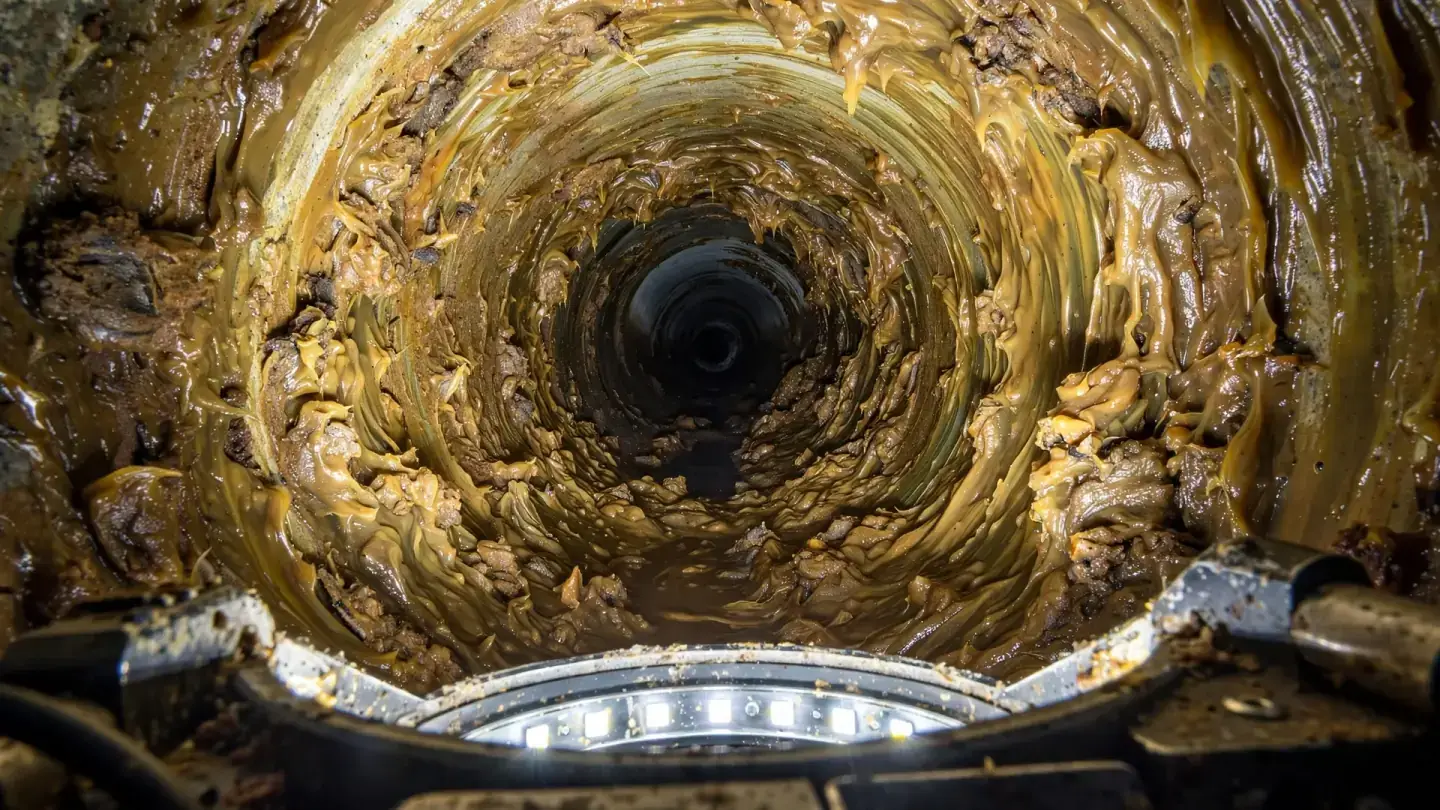
Hot grease is liquid when it goes down the drain. As it cools in the pipe, it turns solid and sticks to the walls. Food particles, soap and other waste cling to it, and the opening slowly shrinks.
On a city scale, combined fat and waste can form huge masses known as fatbergs that block public sewers [3]. In a single restaurant, the same process clogs the line between the sinks and the interceptor, or the line from the interceptor to the street.
Henderson's hard water adds to the problem. The city's supply runs at roughly 16 grains per gallon [8], and hard water leaves carbonate scale behind, more so when heated [9]. Dish machines and hot-water sinks give that scale plenty of chances to form and to trap grease with it.
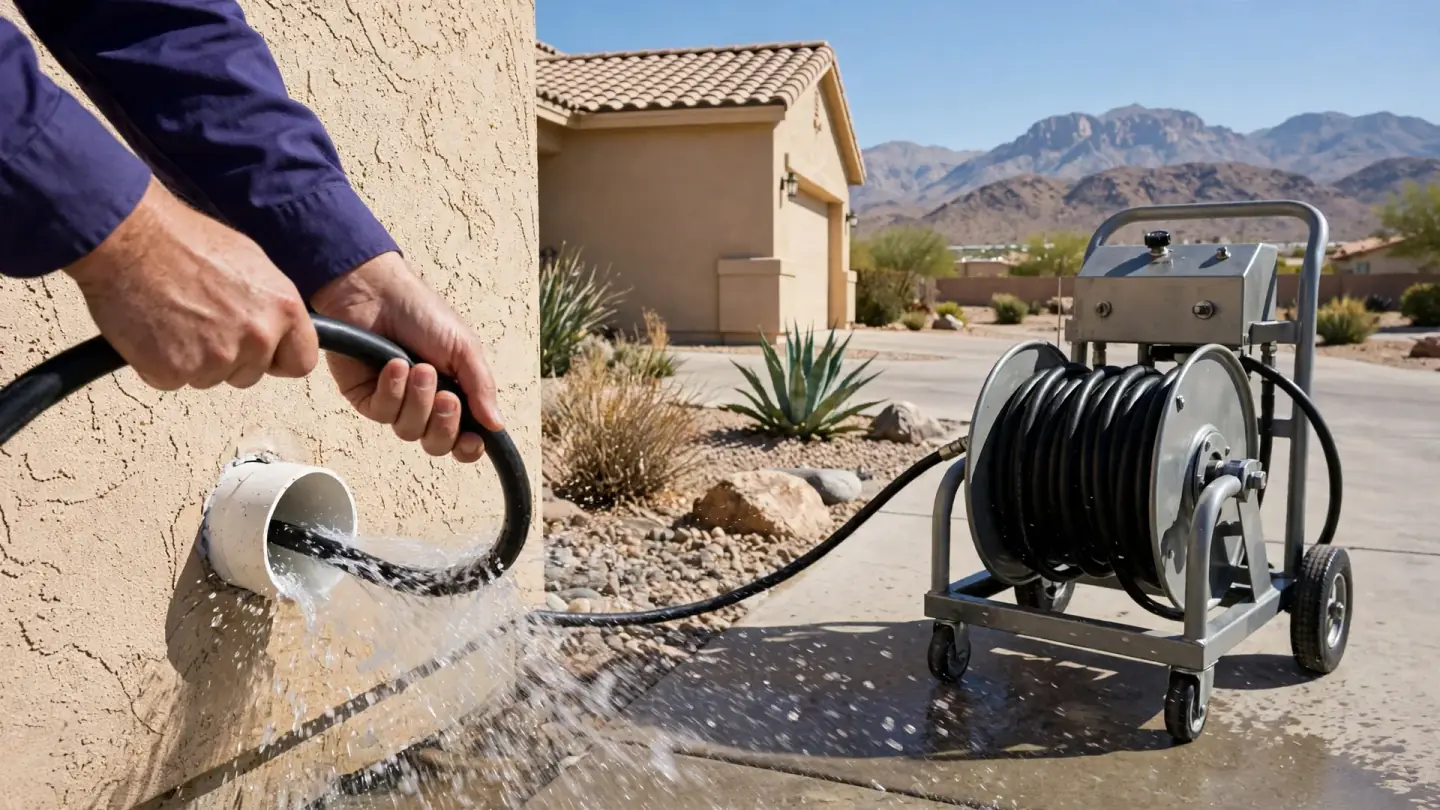
Water jetting is the usual answer for grease-coated lines. The hydro jetting page explains how it works and why it is better than a cable for this kind of buildup.
Typical process
How an independent contractor usually handles a commercial job
- 1
Walk through the property
The contractor asks about the layout, fixture count, cleanout locations and past problems, and may ask for building plans if they exist.
- 2
Agree on timing
Work is often planned before opening, after closing or on a slow day, so service and tenants are disturbed as little as possible.
- 3
Isolate the problem
Using cleanouts and sometimes a camera, the contractor works out which line or branch is causing trouble.
- 4
Clean the line
Cable cleaning for soft blockages, water jetting for grease and scale. Large buildings may need several access points.
- 5
Verify flow
Fixtures are run and, where useful, a camera pass confirms the line is open and clean.
- 6
Document the work
A short record of what was cleaned and found is handy for property managers, landlords and internal maintenance logs.
Planning
Scheduling around business hours
Most commercial drain work can be planned to avoid peak trading times. Here are common approaches.
| Business type | Quiet window to ask about | Things to plan for |
|---|---|---|
| Restaurant | Before prep starts or after closing | Staff access, kitchen floor protection, dish machine shutdown |
| Office | Early morning or weekend | Restroom closures, building access, elevator use |
| Retail | Before opening | Customer restrooms, back-of-house access |
| Apartment building | Midday on a weekday | Tenant notice, asking residents to limit water use |
| Medical office | Before or after patient hours | Keeping some restrooms available, sensitive areas |
Ask the contractor what quiet windows they work in; availability varies.
Day to day
Staff habits that keep business drains open longer
Cleaning resets the pipes, but what goes down them between visits decides how long they stay clear. Simple routines for staff make a real difference.
- Scrape before washingTrain kitchen staff to scrape plates and pans into the trash or compost before they reach the sink or dish machine.
- Collect fryer oil separatelyUsed cooking oil belongs in a dedicated container for recycling or disposal, never in a floor drain or mop sink.
- Keep strainers in placeBasket strainers on prep and floor drains catch food solids. Empty them into the trash, not back into the sink.
- Post restroom signsA short note asking people to flush only toilet paper cuts down on wipes, paper towels and hygiene products in the stacks.
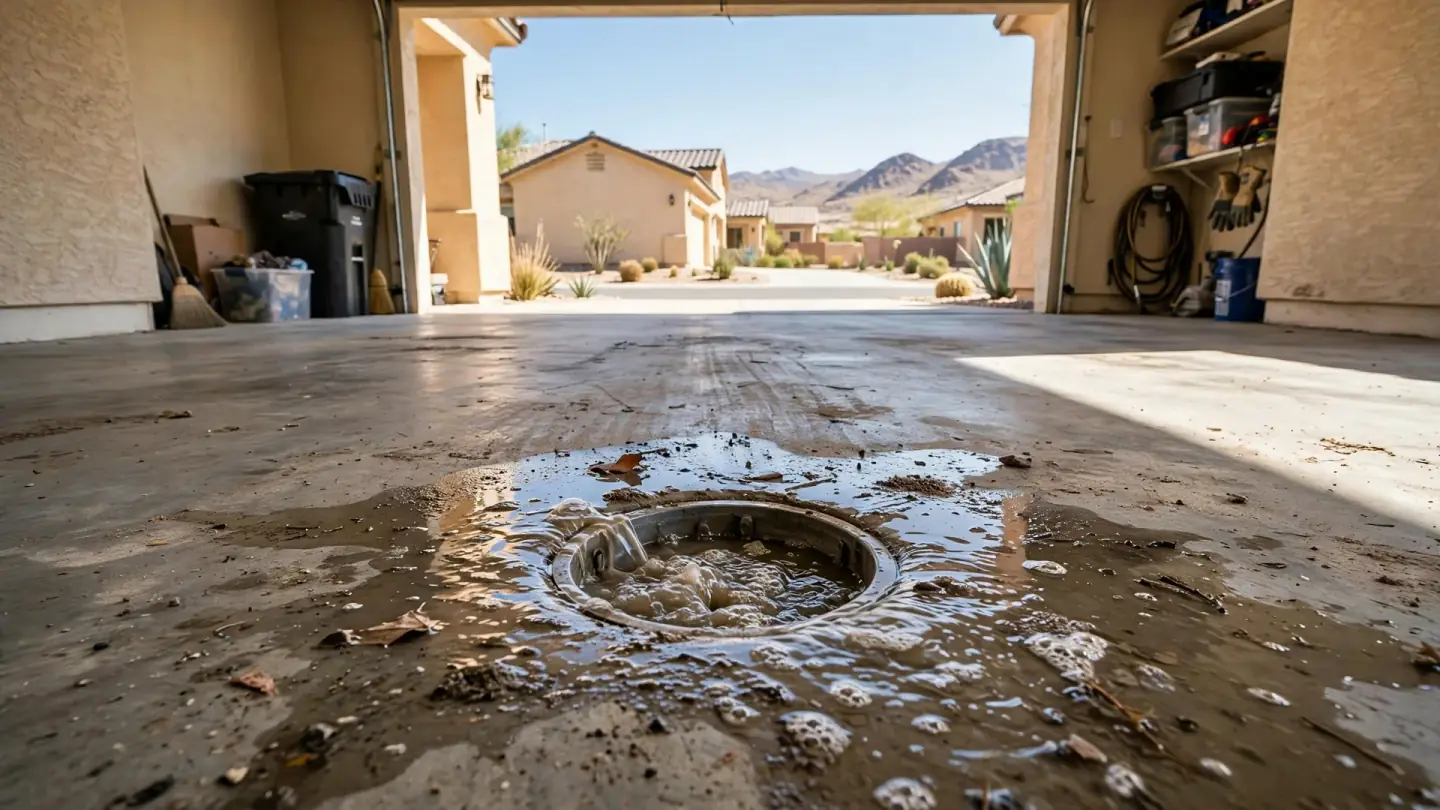
- Run water in quiet roomsIn buildings with rarely used restrooms or floor drains, pour water into them now and then so trap seals do not dry out in the desert heat.
- Report slow drains earlyAsk staff and tenants to flag a slow sink or gurgling toilet right away. Early warning lets you plan a cleaning before it becomes a closure.
Routine service
Moving from reactive calls to a schedule
Many businesses only call when something backs up. That works until a stoppage lands on your busiest night. A planned schedule lets the work happen when it suits you instead.
A contractor can look at your history, your fixture count and the condition of your lines on camera, then suggest how often key lines should be cleaned. Kitchens with heavy frying usually need more attention than a small office.
Our preventative drain maintenance page covers routines in more detail, and businesses near the historic core can find local context on the downtown Henderson and Water Street area page.
Before you book
Questions business owners should ask
- Can you work before opening or after closing hours?
- Do you clean lines leading to and from grease interceptors, or do I need a separate pumping service?
- Will you use a camera to confirm the line is clean?
- How many access points do you need, and will any area need to close?
- Can you provide a written record of the work for my maintenance file?
- If you find damage, does the repair need a permit from Henderson Building and Fire Safety?
Codes and repairs
When cleaning leads to repair work
Sometimes cleaning reveals a broken pipe, a failed fitting or an interceptor problem. Henderson has adopted the 2024 edition of the Uniform Plumbing Code plus the regional Southern Nevada amendments, and Building and Fire Safety acts as the permit office for plumbing work [6]. Las Vegas, Clark County and other Southern Nevada jurisdictions adopted the same code with regional amendments [7], so contractors working across the valley are used to these rules.
The contractor will know if the job needs a permit to the repair they suggest. If a problem appears to be in the public main, the City of Henderson's Utility Services department is the contact; it runs a Customer Care Center at City Hall and keeps a number to call outside office hours when the public sewer fails [5].
Keeping grease out of the sewer also supports the wider system. Henderson treats its wastewater at the city-run Kurt R. Segler plant, and treated water is reused for golf courses, parks and landscaping [10].
FAQ
Commercial drain questions from Henderson business owners
Answers here focus on commercial drain cleaning; see the [drain FAQ hub](/faq/) for more. Back to [every drain service we cover](/services/).
Is pumping a grease interceptor the same as cleaning a restaurant's drain lines?
Grease interceptor pumping is not the same as drain line cleaning: pumping empties the interceptor, while line cleaning clears grease that hardens in the pipes leading to it. Henderson Municipal Code 14.09 obliges food service establishments to put in and keep up interceptors [1]. Many restaurants schedule both, because a freshly pumped interceptor will not help a kitchen line already coated with grease.
Can two businesses in a Henderson strip center share one grease interceptor?
Two businesses cannot share a grease interceptor under Henderson's pretreatment rules, because each interceptor may serve only one business [1]. That matters when a new food tenant moves into a strip center unit. Property managers usually confirm the setup with the City of Henderson pretreatment program before a lease starts, and a drain company can clear lines once ownership is clear.
How often should a commercial kitchen in Henderson have its drains cleaned?
Commercial kitchen drain cleaning frequency usually depends on menu, volume and how much grease reaches the lines, so there is no single schedule. Busy fryer-heavy kitchens often need more frequent attention than cafes. Grease can combine with other waste into solid masses inside pipes [3], so many operators set a schedule after a camera inspection shows how quickly buildup returns.
Can drain cleaning be done at my business after hours?
Commercial drain cleaning can often be scheduled before opening or after closing so customers and staff are not disrupted. Availability varies by contractor, so ask about timing when you call and the local drain company can say what windows they offer. Sharing the location of cleanouts, interceptors and restrooms ahead of time usually makes the visit shorter.
Who is responsible for the sewer line outside my commercial building in Henderson?
The property owner is responsible for the sewer lateral from a commercial building to the city main, while the City of Henderson maintains the main itself [4]. In multi-tenant buildings, leases usually decide whether the landlord or tenant arranges cleaning. If a backup seems to start in the public main, the city's Utility Services Customer Care Center is the usual contact [5].
Do office buildings and retail stores need drain cleaning too, or just restaurants?
Office buildings and retail stores need drain cleaning too, though usually less often than restaurants. Restroom lines can block with paper and wipes, break-room sinks collect food scraps and grounds, and floor drains can dry out and smell. Henderson's very hard water also leaves scale inside pipes over time [8][9], so periodic checks help any busy building.
Will my Henderson restaurant need a permit for drain line repairs?
Commercial drain cleaning itself usually does not need a permit, but repairs, replacements and new interceptors typically do. Henderson has adopted the 2024 UPC with the local amendments used across Southern Nevada, and Permit applications go through Building and Fire Safety [6]. The contractor you're connected with can explain whether a recommended repair falls under permitting.
Sources and citations
- [1]City of Henderson: Pretreatment program
- [2]Wikipedia: Grease trap
- [3]Wikipedia: Fatberg
- [4]City of Henderson: Water and sewer laterals
- [5]City of Henderson: Utility Services Customer Care Center
- [6]City of Henderson: Uniform Plumbing Code
- [7]CONTRACTOR: Southern Nevada adoptions of the 2024 UPC and UMC
- [8]City of Henderson 2024 Water Quality Report
- [9]Wikipedia: Hard water
- [10]City of Henderson: Wastewater treatment