Key facts: Kitchen Drain Cleaning
- Fats, oils and grease cool and harden inside drain lines and can combine with other waste into solid masses known as fatbergs [1].
- Henderson requires food service businesses to install and maintain grease interceptors under Municipal Code 14.09 [2].
- Henderson water is very hard, around 16 grains per gallon, because it carries calcium and magnesium from the Colorado River [3].
- Hard water scale builds up on surfaces, especially where water is heated, such as hot rinse water from a dishwasher [4].
The kitchen line
Why the kitchen clogs more than any other drain
A bathroom sink sees soap and toothpaste. A kitchen sink sees bacon fat, pasta water, rice, coffee grounds, eggshells and whatever the disposal grinds up. Most of that is fine on its own. Together, in a cooling pipe, it becomes a sticky paste that narrows the line a little more with every meal.
Grease is the anchor. It goes down warm and liquid, then cools and hardens on the pipe wall [1]. Food particles stick to it, more grease coats them, and the layer grows inward. Henderson's hard water adds a mineral crust underneath, which gives that grease an even better grip [4].
- Disposal, dishwasher and sink all share one drain line
- Grease hardens as it cools inside the pipe
- Mineral scale gives food waste a rough surface to cling to
- The line often runs a long way under the slab before reaching the main
Signs
How a kitchen clog usually shows up
Water stands in one or both basins
In a double sink, both sides usually share a single trap or tie together just below it, so a clog there backs up both.
Dishwasher leaves water behind
The dishwasher pumps into the sink drain or disposal. If that line is narrowed, water stays in the bottom of the tub or backs into the sink during a cycle.
Disposal hums but water will not leave
The grinder may be fine while the pipe after it is packed. A disposal can only push waste as far as the line allows.
Sour smell under the sink
Rotting food stuck in the trap or along the line gives off a smell that gets stronger in summer heat.
Gurgling after the sink drains
A partly blocked line pulls air through the trap as water squeezes past the clog.
Grounds or food in the other basin
Running the disposal pushes debris up through the opposite side. The blockage is downstream of where the two sides join.
Henderson specifics
What makes Henderson kitchen lines different?
The water is the starting point. Every drop in the city is Colorado River water taken from Lake Mead, and it arrives carrying calcium and magnesium [3]. That works out to roughly 16 grains per gallon, well above the 180 mg/L mark for very hard water [5]. When that water is heated, as it is in a dishwasher, it leaves even more scale behind [4].
Scale and grease reinforce each other. A smooth pipe sheds some grease with each rinse; a rough, crusted one holds onto it. That is why many Henderson kitchen lines clog again within months of being snaked, and why scouring the pipe wall matters more here than in soft-water cities. Our hard water scale guide goes into how that crust forms.
The layout matters too. Most homes in the valley are slab-on-grade, so the kitchen branch often runs under the concrete for some distance before joining the main [6]. You cannot see or reach it, and a cleanout may be the only practical way in.
Grease rules are a city concern as well. Henderson's pretreatment program requires restaurants and other food service businesses to use grease interceptors so fats stay out of the public sewer [2]. Homes do not need interceptors, but the same idea applies at your sink: grease that goes down the drain causes trouble somewhere, often in your own line first. For commercial kitchens, see commercial drain cleaning.
When you can't tell which fixture is the real problem, the general clogged drain repair page helps you narrow it down.
The visit
What the independent contractor typically does
- 1
Check the appliances first
The contractor confirms the disposal turns freely, looks at the dishwasher hose and air gap, and runs water to see where it backs up.
- 2
Open the trap
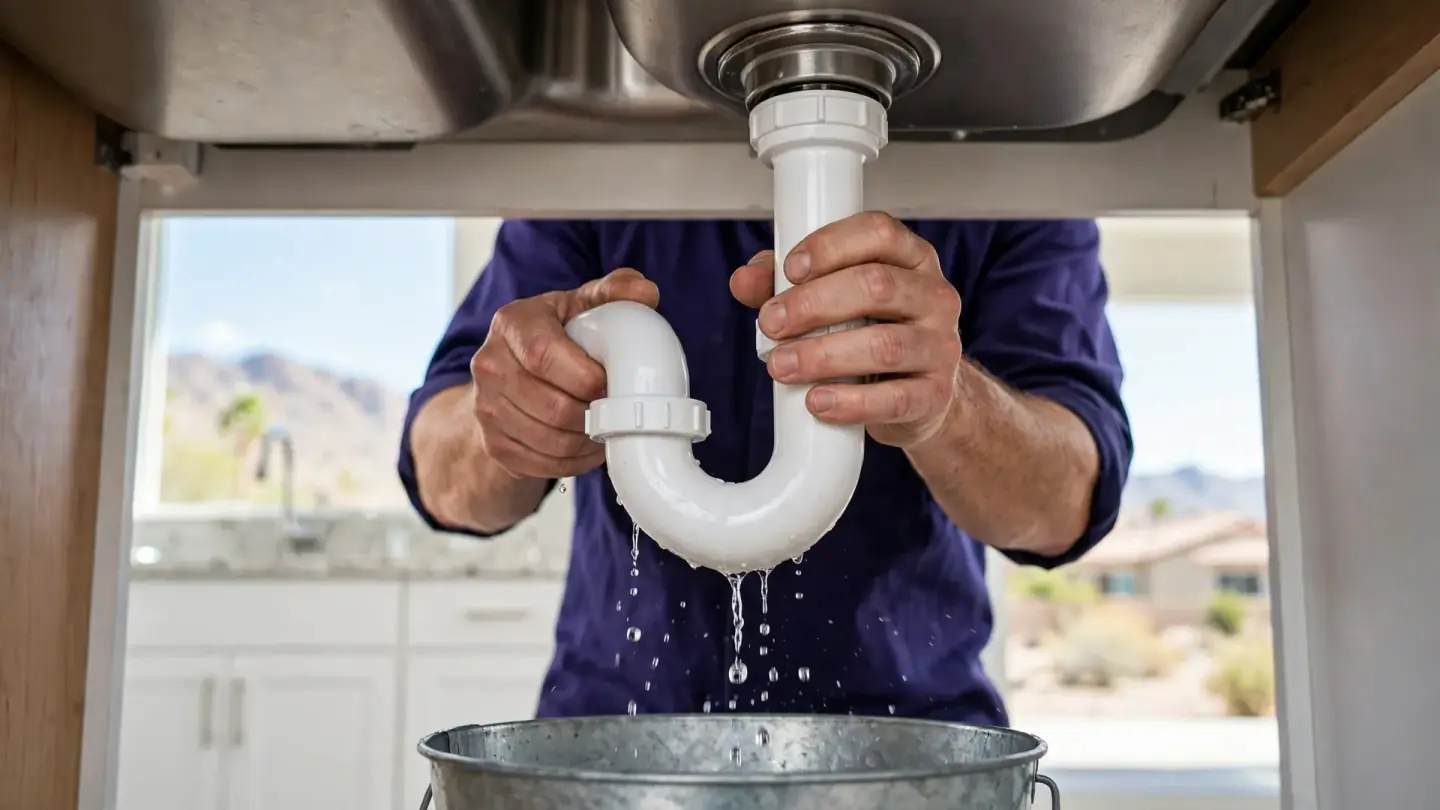
With a bucket underneath, the P-trap is removed and cleaned. Sometimes that is the whole job. If not, the trap opening gives clean access to the wall line.
- 3
Run a cable auger
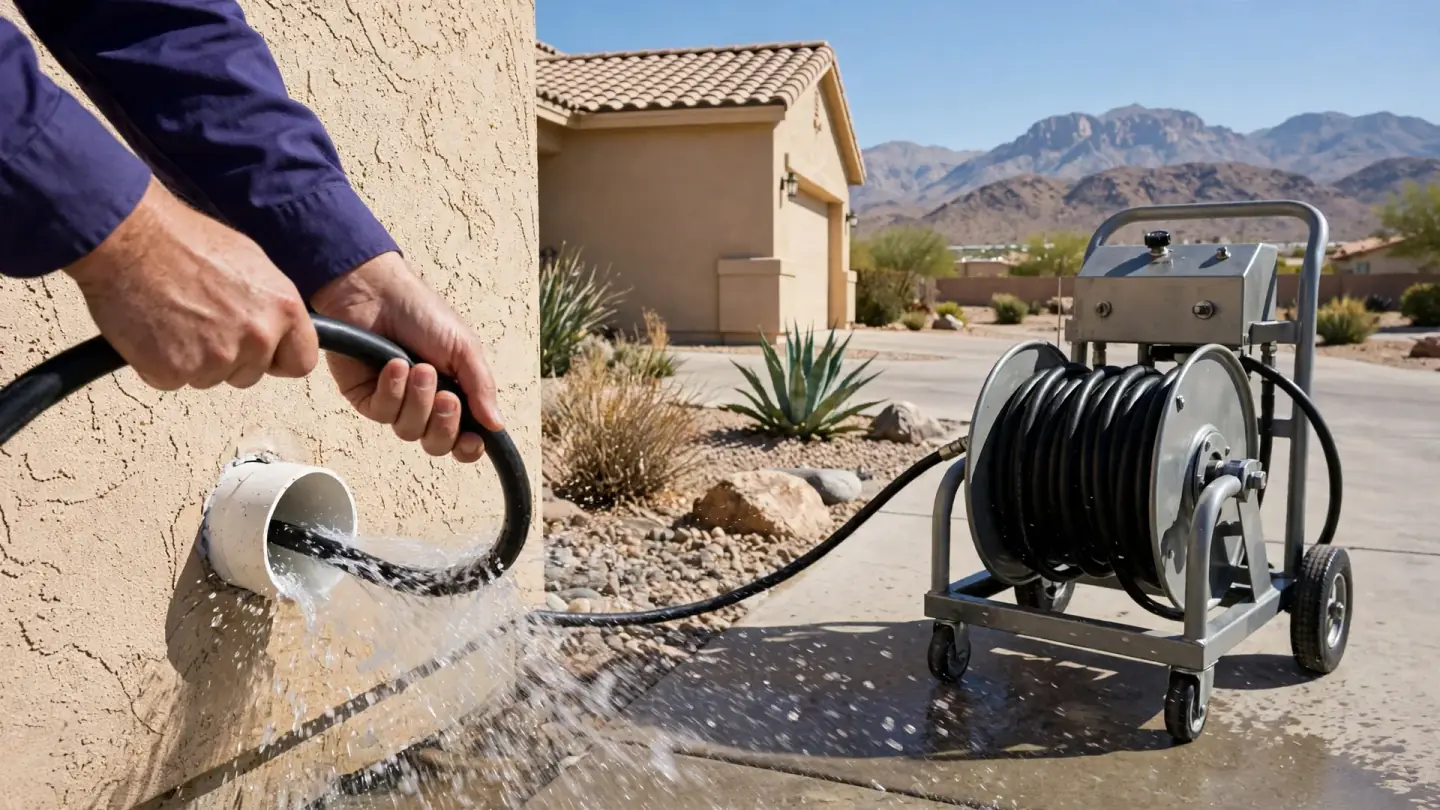
A drain machine sends a rotating steel cable through the branch line to break up the grease plug and pull out food debris [7].
- 4
Decide on jetting
If the cable comes back coated and the line has clogged before, hydro jetting is often recommended. High-pressure water cleans grease and scale off the full pipe wall instead of opening a narrow channel.
- 5
Camera the line if it keeps failing
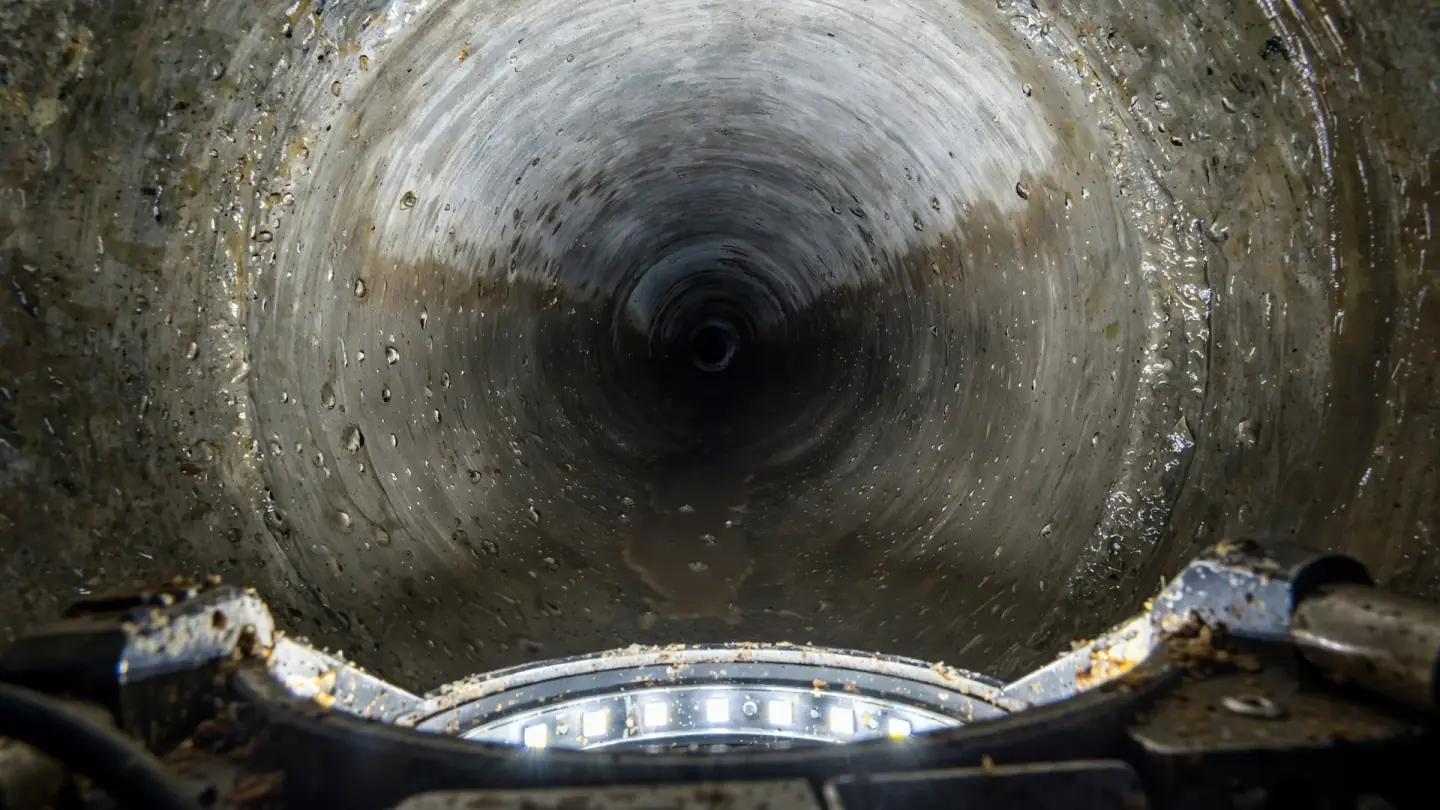
A drain camera inspection can show a belly where water and grease pool, or a joint that catches debris.
- 6
Reassemble and test
The trap and dishwasher connection go back together. Both basins are filled and released, and the dishwasher is run on a drain cycle to confirm everything empties.
Try this first
Safe things to try at the sink
- Reset the disposalWith the power off, check for a jam using the hex key on the bottom of most units, then press the reset button. Never put your hand inside.
- Plunge with the other side sealedOn a double sink, plug the second drain tightly or have someone hold a wet cloth over it, then plunge the clogged side.
- Clean the dishwasher filterMany modern dishwashers have a removable filter at the bottom. A packed filter mimics a drain clog.
- Pull and rinse the trapIf you are comfortable with it, a bucket, gloves and a few minutes are enough to empty a plastic P-trap.
- Hot tap water, not boilingVery hot tap water can soften a fresh grease film. Boiling water can soften plastic fittings and only moves grease further down the line.
Prevention
Kitchen habits that keep the line open
These small changes do more than any product. See [what not to pour down drains](/guides/what-not-to-pour-down-drains/) for a fuller list.
Can the grease
Pour cooled cooking fat into a lidded can or jar and put it in the trash. Wipe greasy pans with a paper towel before rinsing.
Feed the disposal slowly
Run cold water, add scraps a little at a time and keep the water going several seconds after the grinding stops.
Keep starches out
Rice, pasta, potato peels and bread swell with water and form a paste. They belong in the trash or compost.
No coffee grounds or shells
Grounds and eggshell fragments settle like sand in slow pipe sections and bind with grease.
Schedule cleanings if clogs repeat
Kitchens that clog more than once a year often do well with routine preventative drain maintenance.
Urgent cases
When does a kitchen clog turn into an emergency?
A slow kitchen sink is an annoyance. A sink overflowing onto the floor, water coming up through the dishwasher, or a backup that also shows up in a nearby bathroom is a bigger problem, because the clog may be in the main line rather than the kitchen branch.
If water is spreading or you need the kitchen working before a holiday meal, see emergency kitchen drain cleaning. Call to check emergency availability, and turn off the dishwasher and disposal until the line is cleared.
Kitchen lines that clog every few months despite good habits often have a pipe problem underneath. That is the time to ask about a camera look and a full jetting rather than another quick snake.
Around town
Older kitchens, newer kitchens
Age changes the picture. Homes in established areas like Green Valley, which dates back to the late 1970s, have had decades of hard water and cooking grease passing through the same kitchen line [9]. Those pipes tend to carry a thicker crust, and a clog there often means the whole branch is due for a proper cleaning rather than a quick snake.
Newer homes in places such as Inspirada, where the first house was finished in 2007, usually have cleaner pipe walls [10]. Their clogs are more often a single event: a holiday's worth of grease, a disposal overloaded with peels, or a dishwasher hose that was kinked during a remodel.
Either way, the questions the contractor asks are the same. How long has it been slow, what went down recently, and has it happened before? Honest answers help them pick the right tool on the first try.
FAQ
Kitchen sink and disposal drain questions in Henderson
Answers here focus on kitchen drain cleaning; see the [full FAQ](/faq/) for more. Back to [Henderson drain services](/services/).
Why does my dishwasher drain water back into the kitchen sink?
A dishwasher that drains back into the kitchen sink usually points to a clog in the shared drain line, disposal or air gap. Grease and food buildup are common causes, and fats harden as they cool in pipes [1]. Running the disposal and cleaning the air gap may help; if not, the line beyond the trap often needs clearing.
Is a garbage disposal hard on my kitchen drain line?
A garbage disposal is not hard on a kitchen drain when used sensibly, but it does send more food solids into the pipe. Fibrous peels, rice, pasta and grease are frequent clog causes. Running plenty of cold water during and after use helps carry waste down the line instead of letting it settle.
Should I snake or hydro jet a greasy kitchen drain?
A greasy kitchen drain is often cleared with a snake first, but hydro jetting is usually preferred when grease coats the full pipe and clogs keep coming back. A cable punches a hole through a blockage [7], while water jetting washes the pipe walls. The contractor you're connected with typically decides after seeing the line.
Does a Henderson home need a grease trap under the kitchen sink?
A Henderson home usually does not need a grease trap under the kitchen sink; Henderson's grease interceptor rules under Municipal Code 14.09 apply to food service businesses [2]. At home, scraping plates into the trash and wiping greasy pans before washing does much of the same job.
Can hot dishwasher water make scale build up faster in my kitchen drain?
Hot dishwasher water can make hard water scale build up faster, because more mineral deposits form when water is heated [4]. Henderson water is very hard, around 16 grains per gallon [3]. Over time that scale roughens the inside of the kitchen drain, giving grease and food scraps a place to stick.
Why does my kitchen sink drain slowly but the bathroom drains are fine?
A kitchen sink that drains slowly while bathroom drains are fine usually has a clog in its own branch line, often grease and food buildup. Kitchen drains frequently run on a separate branch, so the problem stays local. If the slowdown spreads to other fixtures, the main line may also be involved.
What should I never put down my kitchen sink drain?
A kitchen sink drain should not receive cooking grease, ground beans, eggshells, fibrous peels, rice or pasta in large amounts. Grease hardens in pipes and can combine with other waste into solid masses [1]. Pouring cooled grease into a container for the trash protects your line and the city's sewer system.
Sources and citations
- [1]Wikipedia: Fatberg
- [2]City of Henderson: Pretreatment program
- [3]City of Henderson 2024 Water Quality Report
- [4]Wikipedia: Hard water
- [5]USGS: Water hardness FAQ
- [6]Las Vegas Advisor: Why Las Vegas houses don't have basements
- [7]Wikipedia: Plumber's snake
- [8]Wikipedia: Drain cleaner
- [9]Wikipedia: Green Valley, Henderson
- [10]Builder: Inspirada's history