
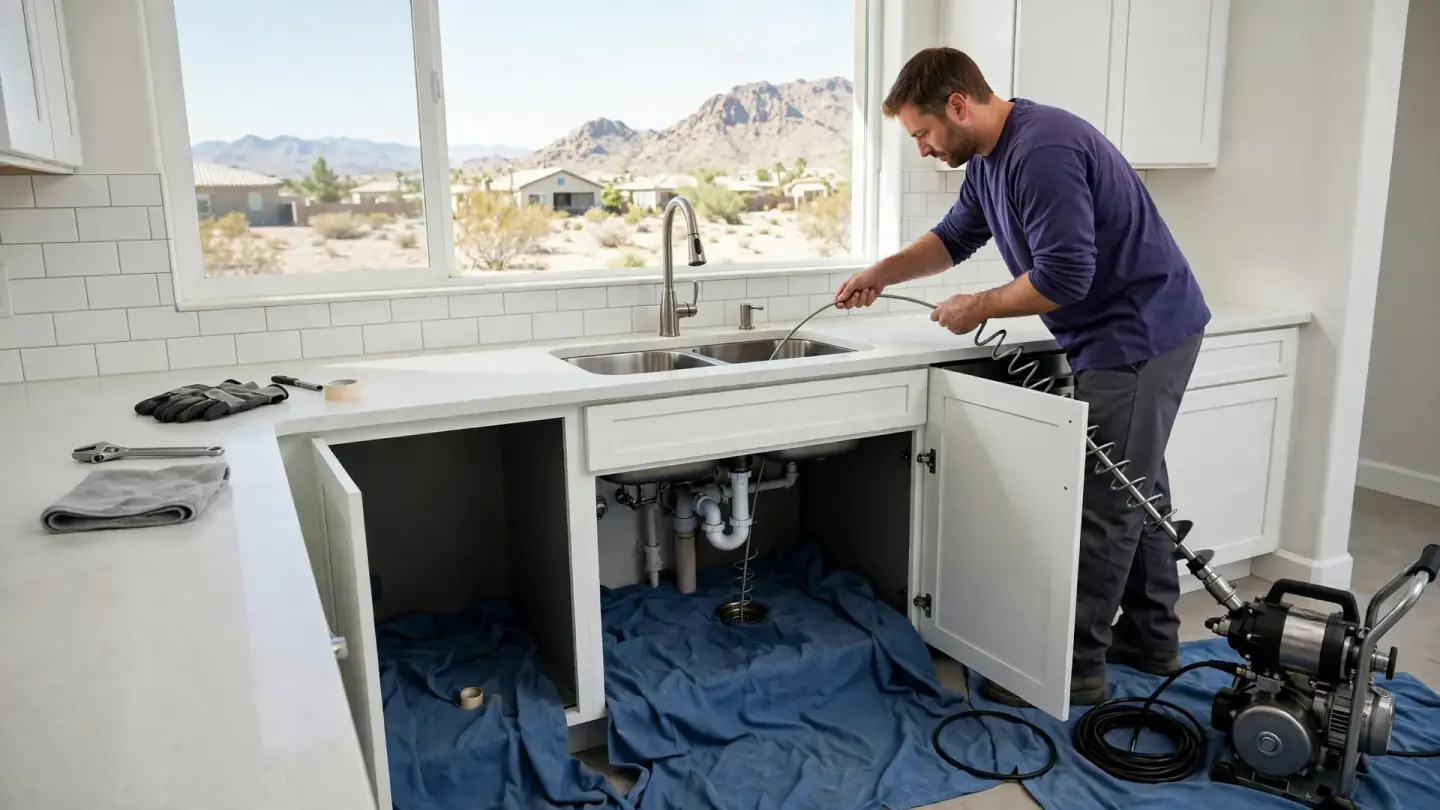
Key facts: HOA and shared sewer lines
- Henderson homeowners maintain the sewer lateral from the building to the city main; the city maintains the main [1].
- A lateral is the pipe that carries sewage from an individual building to a common gravity sewer [2].
- HOA governing documents, called CC&Rs, are recorded with the county and bind current and future owners [3].
- Henderson grew through master-planned communities such as Green Valley, Anthem and Seven Hills [4].
Short answer
Is the sewer line under my HOA home mine or the association's?
It depends on how your property is set up. The default in Henderson is simple: the owner maintains the lateral, the pipe from the building out to the city sewer main, and the city maintains the main itself [1]. That applies to most detached homes, even ones in an HOA.
Things get less clear in attached housing. Townhomes and condos may have several units draining into one pipe before it reaches the city main. That shared stretch might be treated as common property, a limited common element, or each owner's shared responsibility. The association's CC&Rs and related documents are what decide it [3].
Henderson grew through large master-planned communities [4], many with associations, so this question comes up often. This guide helps you figure out where you stand before the next backup.
Symptom check
Backup patterns and who to contact
| What you see | Likely cause | What to do |
|---|---|---|
| Only your unit's fixtures back up | Clog in your own branch or lateral | Call a drain contractor; tell the HOA if lines are shared |
| Your unit and a neighbor's back up together | Clog in a shared line | Call the HOA or manager first |
| Several homes on the street affected | Possible problem in the city main | Report to Henderson Utility Services [5] |
| Street manhole overflowing | Public sewer issue | Report to the city right away |
| Water in a common courtyard cleanout | Shared or association line backing up | Notify the HOA; stop water use |
Safe checks
Working out your line before there's a problem
- 1
Read the CC&Rs
Search them for sewer, plumbing, lateral, utilities and common elements. Note who maintains what.
- 2
Ask the manager for a plan
Many associations have site plans showing where shared lines and cleanouts run.
- 3
Locate your own cleanout
A cleanout near your unit is often the boundary between your pipe and a shared one. See finding the cleanout on a desert home.
- 4
Ask your neighbors
Find out whether anyone has had a backup before and how it was handled.
- 5
Keep the contacts handy
Store the HOA's after-hours number and the city's utility contact with your home documents.
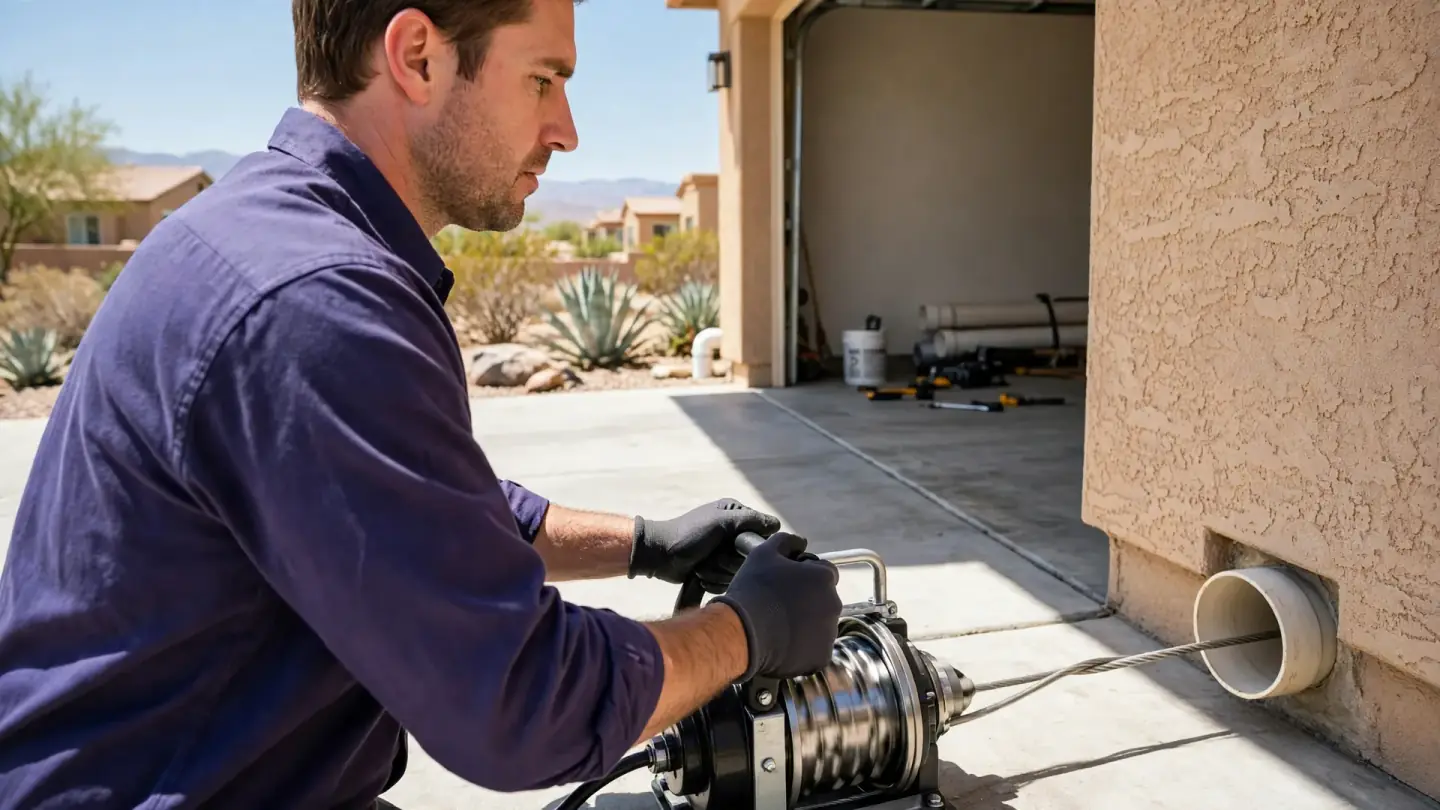
Cause in depth
Attached homes, condos and commercial-style systems
Larger condo buildings and mixed-use projects can have plumbing more like a commercial building, with long horizontal runs, multiple stacks and sometimes grease interceptors. Those systems often need scheduled maintenance by the association. The commercial drain cleaning page covers that type of work.
If you rent, your lease and landlord come first. Tell them straight away and let them decide who is called, unless sewage is spreading and they can't be reached.
How a pro diagnoses it
How a contractor shows whose pipe is blocked
The independent contractor will usually clear the blockage from the nearest cleanout, then run a camera to find where it was and what caused it. Camera footage with distance markings can show whether the clog sat in your branch, a shared section or near the city main. See sewer line inspection for what that involves.
That record is useful when an association needs to decide responsibility. Ask for the footage or a written note of the location. For routine clearing of a lateral, see main sewer line cleaning.